Your dog has seen a squirrel. You’re in the middle of Richmond Park, they’re at the end of their lead, and you’ve lost eye contact. They know “come” at home. They know “come” in the garden. Off-lead with novel distractions? Still a work in progress. This is exactly what long lines are made for — a 5-15 metre line that gives your dog freedom to explore while you retain a physical safety net. Used properly, they’re how most dogs learn properly reliable recall.
In This Article
- What a Long Line Actually Does
- How to Choose a Long Line
- Best Overall: Halti Training Lead 10m
- Best for Large Dogs: Julius-K9 IDC Powair 15m
- Best Budget: Ancol Heritage Long Line
- Best for Wet Weather: Perris BioThane Lead
- Best for Small Dogs: Dexil Friendly Long Line 5m
- Best Tracking Line: Ruffwear Knot-a-Long
- How to Use a Long Line Safely
- Common Long Line Mistakes
- Where to Use Long Lines in the UK
- Frequently Asked Questions
What a Long Line Actually Does
A long line is a training tool that bridges the gap between on-lead walks and genuine off-lead freedom. For the weeks or months between “my dog needs a lead in public” and “my dog has bombproof recall,” the long line lets your dog make choices — to chase the leaf, to investigate the smell, to come back when called — while you retain the ability to physically prevent disaster.
This is not a longer dog lead. A standard lead tells your dog where to go. A long line does the opposite: it gives your dog room to get it wrong, and room to learn from getting it right.
Why Not Just Use a Longer Lead?
Standard leads are 1-2 metres for close control. Flexi/retractable leads are 5-8 metres but they create tension constantly and teach dogs to pull. Long lines are unweighted, lightweight, and either lie slack on the ground or move through your loose grip — your dog doesn’t feel the resistance of a Flexi mechanism reeling them in.
That difference matters enormously for recall training. You want your dog choosing to come back because they want to — not because something’s pulling them.
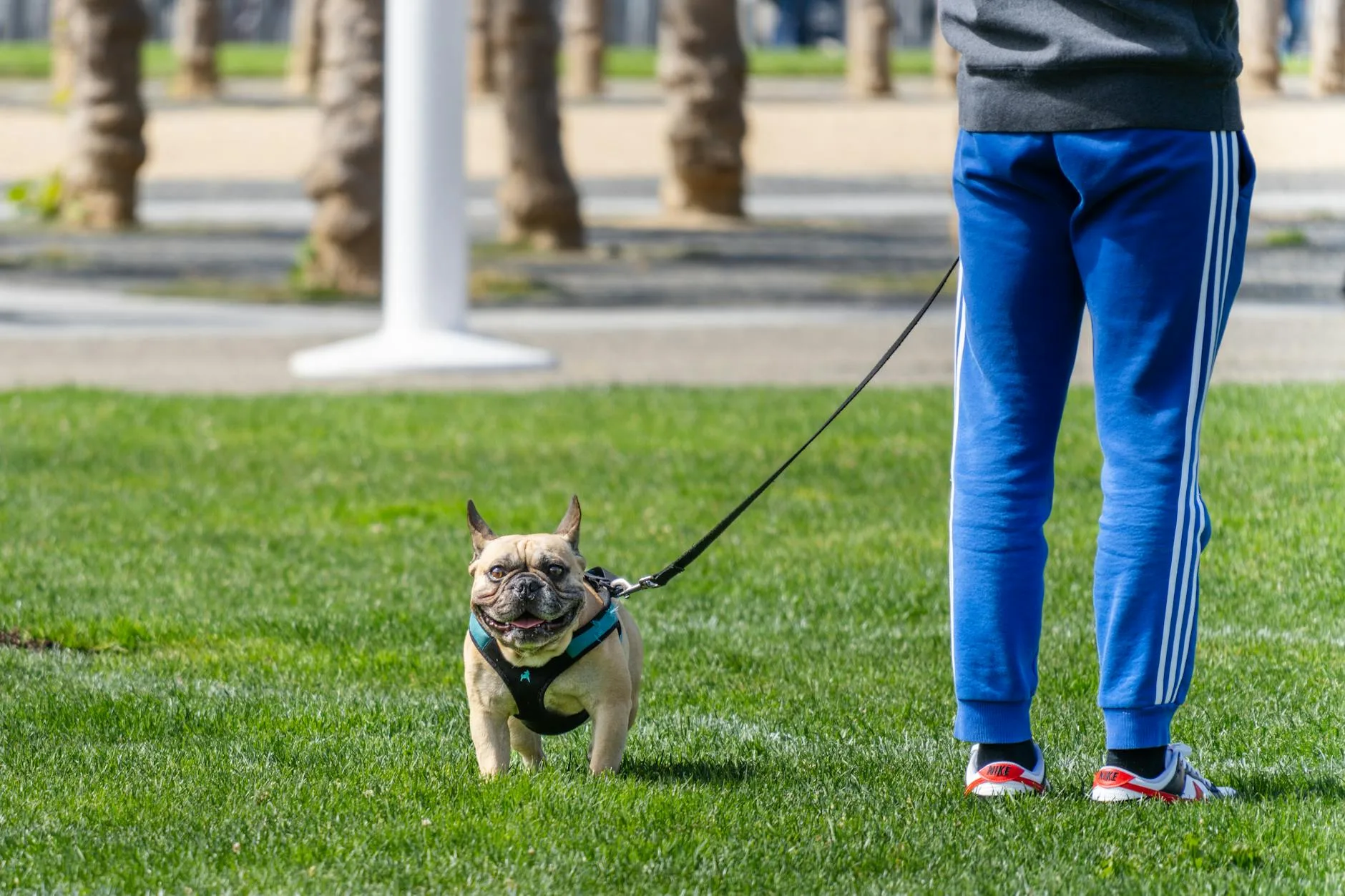
How to Choose a Long Line
Five criteria matter. In priority order:
- Length — 5m for puppies and small dogs, 10m for most adult dogs, 15m+ for scent training or gundog work. Start shorter than you think and size up as your dog’s training progresses.
- Material — Nylon (cheapest, absorbs water), BioThane (waterproof, wipes clean, heavier), cotton webbing (traditional, comfortable, absorbent), paracord (lightweight but tangles).
- Attachment — Always a harness, never a collar. A dog hitting the end of a 10m line at sprint can rupture their trachea if attached to a collar. Use a Y-shaped harness with a back clip for long-line work.
- Clip type — Trigger snap for most dogs; scissor snap (two-hand operation) for strong dogs that have learned to paw at regular clips.
- Handle — A padded handle is nice but most trainers don’t hold the handle during active training — the line trails on the ground and you step on it to slow the dog or pick it up to stop them. A plain looped end works fine.
What You Don’t Need
Retractable mechanisms. Swivels at every metre. Reflective stitching (nice-to-have but not critical for daytime use). Branded trainer-endorsed “signature” lines — most are repackaged Ancol or similar at 3x the price.
Best Overall: Halti Training Lead 10m
The Halti Training Lead 10m is £19.99 from Pets at Home, Amazon UK, and Halti UK direct. It’s the long line I’d buy for most UK dog owners starting recall training.
What the Halti Does Well
Simple nylon webbing with trigger clip. No bells, no gimmicks. The fabric is soft enough not to rope-burn your hands when you grip it abruptly (more common than you’d think during panic moments). Trigger clip is solid brass — it doesn’t rust after a wet winter.
Length is the sweet spot. Ten metres gives genuine distance while remaining manageable on typical UK park paths. Shorter than 10m and you’re basically just using a slightly longer lead; longer than 15m and the line becomes hard to control around other walkers.
Black colour is practical. Brightly coloured lines look nice in photos but get filthy fast on muddy UK ground. Black hides wear and dirt.
What It Doesn’t Do
No padded handle. You can improvise one with a carabiner or just use the loop end. Not a dealbreaker but worth knowing.
Nylon absorbs water. After a muddy park walk, the line is heavier and needs washing. BioThane handles wet weather better — but costs more.
Best for Large Dogs: Julius-K9 IDC Powair 15m
The Julius-K9 IDC Powair 15m is £32 from Julius-K9 UK and specialist retailers. Built for working-breed strength, designed to handle GSDs, Rottweilers, Malinois, and large mastiffs.
Why Big Dogs Need Different
A Labrador hitting full sprint at the end of a 15m line exerts roughly 4-5× their body weight in force at the clip. That’s 150-200 kg of peak load. Standard nylon webbing stretches under that load; trigger clips deform or snap. The IDC Powair uses heavier webbing and a stainless steel scissor clip rated to proper working loads.
Reflective weave runs the length of the line for dusk or early morning use. Handle is padded neoprene — necessary when you’re holding 40kg of Dobermann choosing to chase a fox.
Who Shouldn’t Buy It
Owners of small or medium dogs. Overkill for anything under 25kg. The extra weight of the line makes short-distance training harder — your dog feels the line even when it’s slack.
The scissor clip needs two-handed operation. Some owners find it fiddly in cold weather or if they’re juggling phone and bags.
Best Budget: Ancol Heritage Long Line
The Ancol Heritage Long Line comes in 5m, 10m, and 15m lengths. Pricing: £9-15 depending on length, from Pets at Home, Amazon UK, Argos, and independent pet shops.
Where It Fits
Genuine budget tier that doesn’t feel like a compromise. Ancol is a UK brand that’s been making basic dog gear for decades, and their long line is the definition of competent value. Traditional-looking brown cotton-nylon blend webbing, brass trigger clip, plain looped handle.
Used hundreds of UK dog trainers (the line, not just the brand) — if you ask at a local club which long line to buy on a tight budget, you’ll hear Ancol more often than anything else.
Honest Limits
Cotton-nylon blend is comfortable to handle but absorbs water badly. After a muddy walk the line is heavy and takes a full 24-48 hours to air-dry. You’ll want a second line in rotation if you walk daily in wet weather. For a related angle, see our Positive Reinforcement Training: A Beginner’s Guide guide.
Trigger clip is on the smaller side — fine for most dogs but not for 40kg+ working breeds.
Best for Wet Weather: Perris BioThane Lead
The Perri’s BioThane Long Line is £28-42 (depending on length) from Perri’s Leather UK and specialist online retailers. BioThane is a plastic-coated polyester webbing that’s fundamentally waterproof.
The Wet-Weather Advantage
Doesn’t absorb water at all. A muddy river walk ends with a BioThane line that wipes clean in 10 seconds. No drying time, no mould risk, no stink when stored damp. For UK owners walking through the winter, this is properly transformative.
Lies flat on the ground without tangling as much as nylon. Tangles are the single most frustrating part of long-line training; BioThane reduces them noticeably without eliminating them.
Range of colours with good UV resistance. Doesn’t fade like nylon does over seasons of park use.
Trade-offs
Heavier per metre than nylon. At 10-15m lengths this becomes noticeable — your dog feels more line weight even when the line is slack. Some owners find this a positive (it gives the dog a clearer signal that they’re on a long line), others find it interferes with natural off-lead behaviour.
Price. £28 vs £10 for a basic Ancol is a real step up. Worth it if you walk daily in wet conditions; harder to justify for summer-only use.
Handle feel is plasticky rather than soft. Not bad, just different from fabric lines.
Best for Small Dogs: Dexil Friendly Long Line 5m
The Dexil Friendly Long Line 5m is £16 from Dexil UK direct and Amazon UK. Designed for dogs under 15kg — lightweight webbing, smaller trigger clip, shorter length appropriate for small breeds.
Why Small Dogs Need Different
A standard 10m long line weighs 300-400g in nylon. For a 6kg Yorkie or a 10kg Cockapoo, that’s roughly 5% of the dog’s bodyweight dragging behind them. Most small dogs find this uncomfortable and stop moving naturally — which defeats the training purpose. Our How to Spot Good Quality Dog Food: 5 Label Red Flags guide is useful alongside this.
Dexil’s line is noticeably lighter per metre. The 5m length is also more suitable for small-dog recall training, which usually happens in smaller spaces (local parks, enclosed fields) rather than the wide-open expanses where large-dog training takes place.
Colour-coded handles available — Dexil’s “Friendly”, “Nervous”, “Training” colour-coded system is a nice touch if you want other park users to give your dog appropriate space. Not mandatory but helpful.
What It Isn’t
A large-dog line. Don’t stretch this across breeds — the trigger clip is too small and the webbing too thin for anything over 15kg.
Only available up to 5m. For working gundog training or advanced scent work you’ll need a different line.
Best Tracking Line: Ruffwear Knot-a-Long
The Ruffwear Knot-a-Long is £52 from Ruffwear UK, Cotswold Outdoor, and specialist retailers. It’s designed specifically for tracking, scent work, and gundog training — applications where 15m+ lines are needed.
Why Specialist Tracking Lines Exist
Tracking dogs work slowly with their nose down, the line trailing behind them. You don’t hold the line tight — you let it drag so the dog can follow scent freely. This needs a specific type of webbing that lies flat without twisting, doesn’t catch on vegetation, and handles moisture without mould.
Ruffwear’s tracking line uses flat weave polyester with reinforced ends. The knot-work on the handle gives grip without bulk. At 30 feet (9m) it’s optimised for field work rather than maximum length.
Who This Is For
Gundog handlers, SAR training, people running scent work with their dog as a hobby. For standard recall training this is overkill — you’re paying for features that don’t matter.
How to Use a Long Line Safely
Long lines cause injuries when misused. Here’s how to do it right.
- Always attach to a harness, never a collar. A dog sprinting to the end of a 10m line generates 4-5× bodyweight in force at the clip. On a collar, that’s tracheal damage. On a harness, it’s a safe stop.
- Wear gloves for the first few sessions. Rope burn from a running line is not fun. Thin cycling gloves or gardening gloves work well.
- Don’t loop the line around your wrist, hand, or body. If your dog bolts and you’re tied in, you can be dragged, have fingers broken, or fall and be dragged further. Always hold the line — never attach it to yourself.
- Keep the line slack when your dog is stationary. Tension on the line teaches your dog to pull. Let the line lie on the ground when it’s not needed.
- Step on the line to slow or stop. Rather than grabbing it and getting burned, plant a foot on the line. Physics handles the rest.
- Choose open ground. Long lines catch on trees, fence posts, rocks, and other dogs. Open fields and broad paths first; wooded areas only once both you and your dog have experience.
- Start short, scale up. 5m for the first sessions even if you’ve bought a 10m line. Your dog needs to learn what “at the end of the line” feels like before they’re allowed more slack.
Tangling Prevention
Tangles are the most common long-line frustration. Reduce them by:
- Walking in a way that keeps the line behind the dog, not across their body
- Avoiding training near other dogs until basics are solid
- Unclipping the line periodically to let your dog shake off any twists
- Never letting the line loop around the dog’s legs — stop and untangle immediately
Common Long Line Mistakes
The biggest mistakes beginners make — and how to avoid them.
Using a Flexi Retractable as a Long Line
Flexis keep constant tension on the line to retract it. That tension teaches your dog that “lead = pulling.” Training recall on a Flexi often actively damages recall. Use a flat long line instead. We cover a similar decision in Best Pet Food 2026 UK: Vet-Recommended Brands for Dogs & Cats.
Attaching to a Collar Instead of Harness
This is the single most dangerous mistake. A bolt to the end of the line on a collar can cause tracheal collapse, neck injury, or crush damage. Always use a well-fitted Y-shaped harness. Our full guide to choosing a dog harness vs collar covers fit in more detail.
Dropping the Line and Assuming Your Dog Is Still Trained
A dropped long line still provides some friction and psychological safety, but if your dog bolts at genuine speed, they will outrun you. Never transition from “line on” to “line off” without multiple sessions where you hold the line loosely to confirm recall is reliable.
Training Only in the Same Location
Dogs are context-specific learners. A dog with “perfect recall” in your local park may have zero recall in a new location with new smells. Train with the long line in at least 5-6 different environments before declaring recall reliable.
Giving Up Too Soon
Long-line training typically takes 3-6 months of regular use before a dog is ready for genuine off-lead. Some dogs never get there. This is normal — high-prey-drive breeds, rescues with unknown histories, and sight hounds often stay on long lines for life, and that’s fine. It’s a safety tool, not a failure signal. You may also want to read How to Choose Outdoor Dog Toys That Last.
Where to Use Long Lines in the UK
UK dog walking spaces vary a lot in long-line suitability.
Excellent: Large open parks (Richmond, Hampstead Heath, Bushy Park, Dovedale), beaches outside bathing areas, open farmland with permission, closed cricket/football pitches outside playing hours.
OK with care: Local parks with wider paths, forest tracks (watch for brambles and other dogs), canal paths (watch for cyclists and bike speeds).
Avoid: Narrow paths, crowded parks, enclosed dog fields shared with other dogs, anywhere near livestock (UK Countryside Code requires dogs on shorter leads near sheep and cattle regardless), any area under 0.5 acre.
UK Countryside Code
Under the Countryside Code, dogs must be on a short lead (max 2m) near livestock and in some designated conservation areas between March and July. A 10m long line doesn’t comply with “short lead” rules. Know your local rules and carry a standard lead as backup if you’ll be crossing livestock areas.
The Kennel Club’s guidance on recall training aligns with long-line use but stresses the importance of proofing in multiple environments before trusting off-lead.
Frequently Asked Questions
How long should my long line be?
Start at 5m for puppies and small dogs. 10m suits most adult dogs for recall training. 15m+ is only needed for scent work or gundog training. Going longer doesn’t help earlier in training — it just creates more tangles.
Can I use a long line with any dog?
Any dog with a well-fitted harness, yes. Very small dogs (under 4kg) need lighter lines specifically designed for toy breeds. Very large dogs (40kg+) need heavier-duty lines like the Julius-K9. Mid-range dogs work with any of the main options.
How often should I use a long line?
Every walk during the training phase (typically 3-6 months). Once recall is reliable, reduce to occasional sessions in new environments or when your dog’s arousal is high. Some owners never fully transition away — and that’s fine.
Is a long line better than a Flexi lead?
Yes, for training purposes. Flexis create constant tension, which teaches pulling. Long lines lie slack, which teaches your dog to check in voluntarily. For casual walks in busy areas, a Flexi is acceptable; for recall training specifically, always use a proper long line.
Can I use a long line in a field of sheep?
No. UK law and the Countryside Code require dogs on short leads (max 2m) near livestock. A 10m long line doesn’t comply and also properly risks letting your dog run at sheep before you can intervene.
What’s the best material for UK weather?
BioThane for wet weather — wipes clean and doesn’t absorb moisture. Nylon or cotton-nylon blend for dry weather and budget options. Paracord is lightweight but tangles more easily and is best avoided for daily use.
How do I wash a long line?
Machine wash in a mesh bag on a 30°C cycle with non-biological detergent, or hand wash in soapy water and rinse thoroughly. Air-dry away from direct heat (radiators damage webbing over time). BioThane lines just need a wipe with a damp cloth.
What if my dog chews the line?
Spray bitter apple on the line for the first few sessions — most dogs lose interest quickly. Never leave a dog alone with a long line attached, as chewing through the line and swallowing pieces is a genuine risk. Lines should only be on during active training.
How long does dog training take? Basic cues can improve in days, but reliable behaviour takes consistent practice over weeks. Short daily sessions work better than occasional long ones.
Should I use treats for training? Yes, especially when teaching new behaviours. Fade them gradually once the behaviour is reliable, but keep praise and occasional rewards in the mix.
When should I get professional help? Get help early for aggression, severe anxiety, guarding or behaviour that feels unsafe. A qualified positive-reinforcement trainer is worth it.
Frequently Asked Questions
How long does dog training take? Basic cues can improve in days, but reliable behaviour takes consistent practice over weeks. Short daily sessions work better than occasional long ones.
Should I use treats for training? Yes, especially when teaching new behaviours. Fade them gradually once the behaviour is reliable, but keep praise and occasional rewards in the mix.
When should I get professional help? Get help early for aggression, severe anxiety, guarding or behaviour that feels unsafe. A qualified positive-reinforcement trainer is worth it.
What should I check first with Best Long Lines for Dogs : Recall Training? Start with the real use case, then check size, compatibility, running costs and maintenance. A product that looks good on paper can still be the wrong fit if it does not suit the room, routine or budget.
How do I avoid wasting money on Best Long Lines for Dogs : Recall Training? Avoid buying on one headline feature alone. Compare the practical details, read the warranty or returns terms, and choose the option that solves your main problem rather than the one with the longest specification list.