Dog food cost per month in the UK usually lands between £15 and £120, depending on dog size and how you feed. A small dog on dry food can cost less than a takeaway a week; a large dog on fresh subscription meals can cost more than a family mobile contract.
In This Article
- Quick Answer: Dog Food Cost Per Month UK
- What Changes the Monthly Dog Food Bill?
- Dry Dog Food: The Cheapest Monthly Option
- Wet, Fresh and Raw Food: How Costs Compare
- Monthly Food Budgets by Dog Size
- Treats, Toppers and Extras People Forget
- How to Reduce Dog Food Costs Without Buying Rubbish
- My Sensible Monthly Budget Recommendation
- Frequently Asked Questions
Quick Answer: Dog Food Cost Per Month UK
For most owners, a realistic dog food cost per month UK budget looks like this:
- Small dog: £15-£35 per month on dry food, £35-£80 on wet or mixed feeding, £65-£100+ on fresh subscription food.
- Medium dog: £25-£55 per month on dry food, £60-£130 on wet or mixed feeding, £90-£150+ on fresh food.
- Large dog: £40-£90 per month on dry food, £100-£220 on wet or mixed feeding, £130-£250+ on fresh food.
Those ranges assume adult maintenance feeding, not a puppy, working dog, giant breed or dog with a veterinary diet. Prescription food can push the bill much higher. A 12kg bag at £50 looks expensive in the trolley, but if it lasts six weeks it may cost less per day than supermarket pouches.
For context, PDSA dog ownership cost guidance includes food as one of the core monthly care costs, alongside insurance, healthcare, poo bags and other essentials. Battersea’s dog cost guide gives a broad monthly food estimate of about £10-£50, based on an average £24 12kg bag, but modern premium and fresh options can go well beyond that.
My practical answer: budget £40-£60 a month for a medium adult dog if you want decent complete dry food with treats and the odd topper. Spend less only if the label still stacks up. Spend more if your dog needs sensitive-stomach food, fresh meals, puppy food or a higher-meat recipe.
What Changes the Monthly Dog Food Bill?
The monthly bill is not just “cheap food versus posh food”. Five things move it quickly: dog size, calories, food format, brand positioning and how disciplined you are with treats.
Dog size and calorie need
A 6kg terrier and a 32kg Labrador are not playing the same game. Larger dogs eat more grams per day, but the difference is not perfectly linear because small dogs often need more calories per kg of body weight. Still, big dogs cost more to feed. No surprise there.
Age matters too. Puppies need more energy for growth and may need puppy-specific recipes. Senior dogs may eat less, but some need joint-support, sensitive-stomach or lower-fat food that costs more per kg.
If your dog is gaining weight, your food budget may be telling you something. Our guide to how to tell if your dog is overweight is worth reading before simply swapping to a cheaper food.
Food format
Dry food is cheapest because it is dense, shelf-stable and bought in large bags. Wet trays and tins include more water, so you often feed more total weight. Fresh cooked food is convenient and appealing, but delivery, refrigeration and portioning all add cost.
Raw feeding can be cheap or expensive depending on supplier, freezer space and how balanced the diet is. It is not automatically cheaper once you include complete minces, supplements, delivery and waste. If you are tempted, read our raw feeding beginner guide before pricing it only by the kilo.
Brand and recipe type
Chicken and rice dry food is usually cheaper than salmon, duck, venison or insect-protein recipes. Grain-free, hypoallergenic and single-protein foods often cost more because the ingredient base is narrower.
The trap is assuming price always equals quality. It does not. Some expensive foods have lovely packaging and average ingredients. Some mid-range foods are perfectly decent. Our guide to dog food label red flags explains what to check before paying premium prices.
Dry Dog Food: The Cheapest Monthly Option
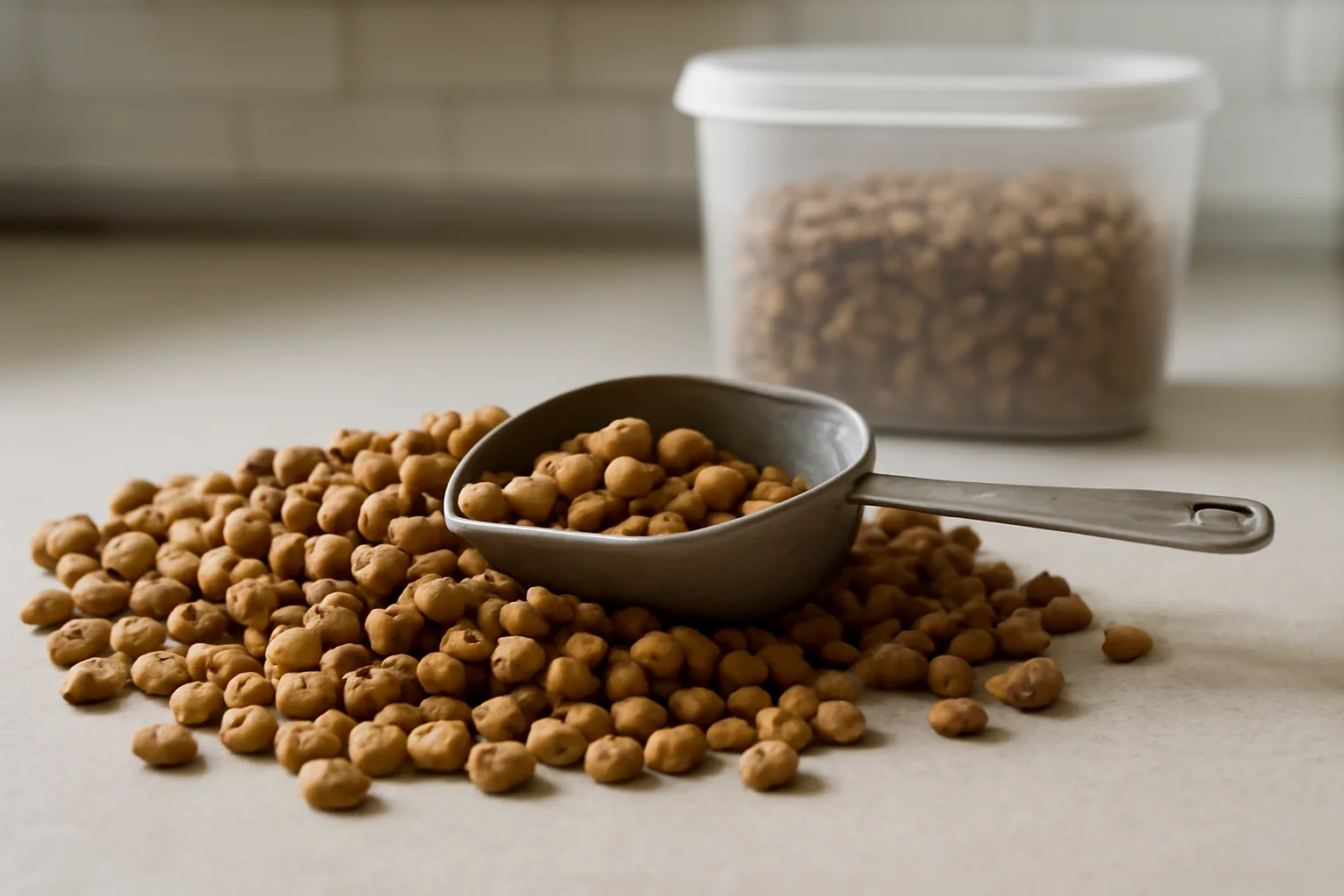
Dry complete food is still the cheapest way to feed most healthy adult dogs in the UK. It is easy to store, easy to measure and much less faff than fresh trays in the fridge.
As current examples, Harringtons Complete Natural Adult Dry Dog Food 15kg at Pets at Home is about £31.51 on Pets Club pricing, or roughly £2.10/kg. A regular price around £39.39 makes it about £2.63/kg. Step up to brands such as James Wellbeloved, Arden Grange, Burns, AVA or Royal Canin and you can easily pay £45-£80 for a large bag, depending on recipe and bag size.
Here is the rough maths:
- Small dog eating 100g/day: 3kg/month. At £2.10/kg, that is about £6.30 before treats. At £5/kg, it is £15.
- Medium dog eating 250g/day: 7.5kg/month. At £2.10/kg, that is about £15.75. At £5/kg, it is £37.50.
- Large dog eating 400g/day: 12kg/month. At £2.10/kg, that is about £25.20. At £5/kg, it is £60.
Those feeding amounts are examples, not instructions. Your food’s feeding guide and your dog’s body condition matter more than a neat table. The key point is that price per kg changes the monthly bill fast, but feeding grams change it even faster.
Dry food also has the lowest waste if you store it properly. Once a bag is open, oxygen, warmth and moisture all work against freshness. Our dog food storage guide covers the boring-but-useful bit: airtight containers, keeping the batch code, and not pouring new kibble over stale crumbs.
Wet, Fresh and Raw Food: How Costs Compare
Wet food is more expensive per calorie because you are paying for moisture and packaging. A small dog might eat one tray or pouch a day. A larger dog may need several. That is where a £1.50 tray stops looking harmless.
If a medium dog needs two £1.80 trays a day, that is £3.60 daily or about £108 a month. If a large dog needs four, the monthly bill jumps past £200. Wet food can be brilliant for palatability and hydration, but it is rarely the budget option.
Fresh subscription food sits higher again. Different Dog’s own shop example lists a 6kg dog on a full diet at about £2.20/day and a 14kg dog at about £4.40/day, which works out at about £66 and £132 a month. Smart Bark’s 2026 Different Dog review quotes around £2.46/day for a 6kg dog, £2.96/day for a 12kg dog and from £3.32/day for a 26kg dog, depending on plan and portion.
Butternut Box pricing varies after the online quiz, and the company has a help page explaining price changes and daily-plan calculations, so I would treat any public “from” price carefully. In real-world terms, owners often report fresh-food plans from roughly £2-£6+ per day depending on dog size. That puts many medium dogs somewhere around £75-£180 a month.
Raw can be cheaper than fresh subscription food if you buy complete frozen minces in bulk, but it needs freezer space and careful hygiene. Complete raw minces can sit around £3-£6/kg, while premium options cost more. A medium dog eating 300g/day at £4/kg would cost about £36 a month for the main food; at 500g/day and £6/kg, it becomes about £90.
If you are comparing fresh brands, our Butternut Box vs Different Dog vs Pure comparison is the better place to judge recipe style and convenience. This article is about the monthly bill.
Monthly Food Budgets by Dog Size
Use these as planning numbers, not feeding advice. Dogs vary too much for one budget to fit every breed.
Small dogs
Small dogs are where premium food is easiest to justify because the absolute monthly difference is smaller. A 5-8kg dog on dry food may cost £10-£25 a month for the main food. Add treats and you are often around £20-£40.
Wet or fresh food changes that quickly. One fresh plan at about £2.20/day is about £66 a month before treats. That might still be manageable for one small dog, which is why subscription brands often feel more sensible for cockapoos and terriers than for large retrievers.
Medium dogs
A medium dog is the best benchmark for most UK households. On decent dry food, expect £25-£55 a month including a modest treat budget. On mixed wet and dry, £60-£110 is more realistic. On fresh food, £90-£150 is common.
This is where feeding accuracy matters. Overfeeding by 20% does not just affect weight; it quietly adds a fifth to the food bill. If you scoop by eye, weigh one normal scoop once. It is often more than the guide assumes.
Large dogs
Large dogs make every feeding choice more expensive. A 30kg dog on mid-range dry food might cost £45-£80 a month. Wet-only feeding can be £150-£250+. Fresh subscription feeding can be similar or higher, depending on plan.
For a large dog, I would be very cautious about committing to a fresh-only plan without calculating the adult maintenance cost, not the introductory puppy or trial price. A 50% first-box discount is nice; it does not pay for month four.
Treats, Toppers and Extras People Forget
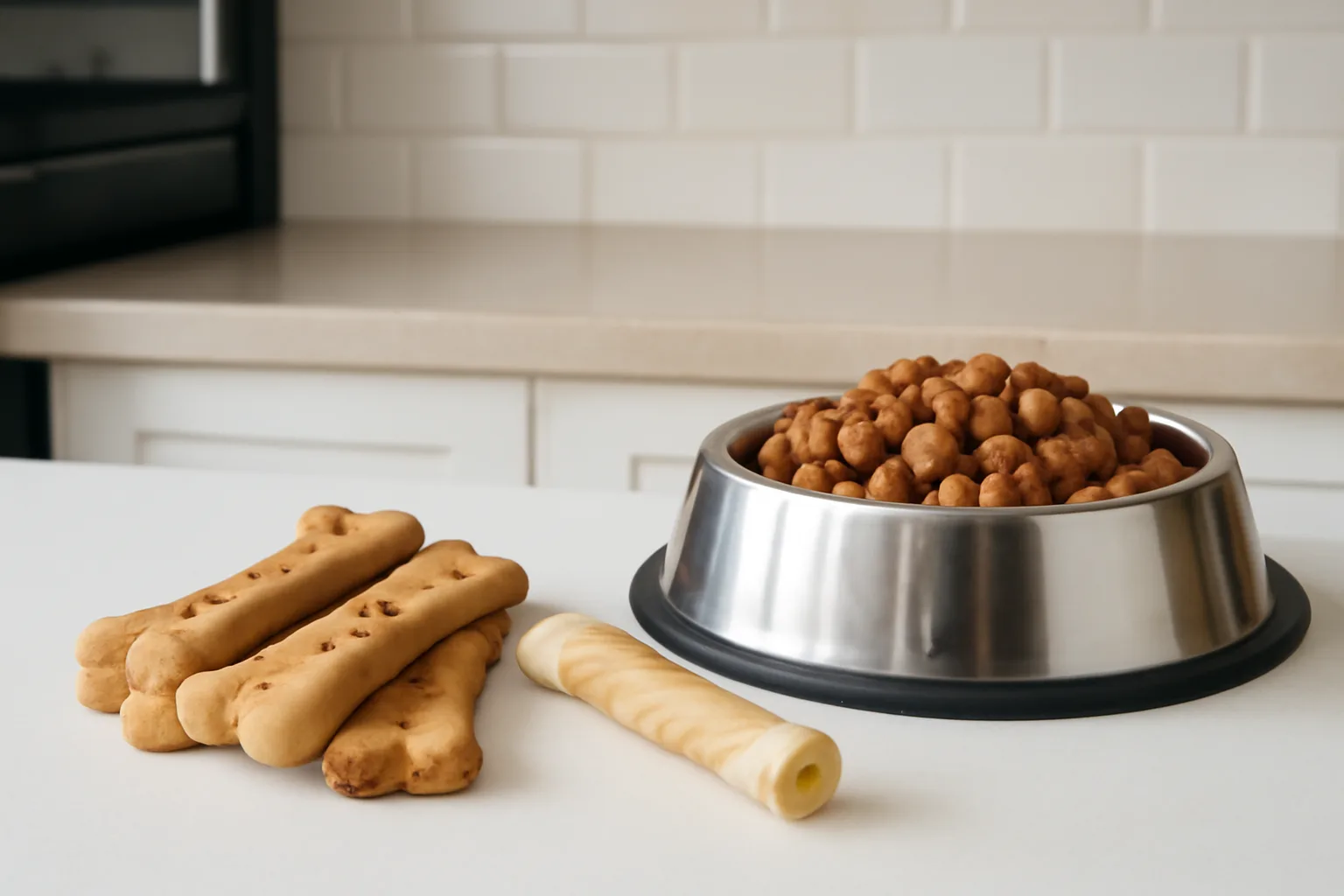
The main food is not the whole food budget. Treats, chews, toppers and training rewards can add £10-£40 a month without you noticing.
Common extras include:
- Training treats: about £2-£5 a bag from Pets at Home, B&M, supermarkets or Amazon UK.
- Dental chews: often £6-£18 a month depending on dog size and brand.
- Wet toppers: £1-£2 per tray can become £15-£40 a month if used daily.
- Natural chews: £1-£5 each for yak bars, pizzles, ears or long-lasting chews.
- Supplements: joint, skin or probiotic products can add £10-£30 a month.
Treats are not bad. They are useful for training and enrichment. The problem is pretending they are not calories and not money. If your dog gets a daily chew, include it in the monthly cost.
For dogs with sensitive stomachs, random toppers are often where things go wrong. Our guide to dog food for sensitive stomachs explains why a stable diet usually beats rotating flavours every few days.
How to Reduce Dog Food Costs Without Buying Rubbish
The best cost saving is buying the right food in the right bag size, not buying the cheapest bag in the shop. A cheap food that needs bigger portions may not be cheaper per day.
Use these checks:
- Compare cost per day, not bag price. Divide bag price by days fed, not by shelf space panic.
- Buy larger bags only if you can store them well. A 15kg bag is poor value if the last third goes stale.
- Use subscriptions carefully. Pets at Home Easy Repeat, Amazon Subscribe & Save and brand subscriptions can help, but only if deliveries match usage.
- Keep treats simple. Measured kibble from the daily allowance works for training many dogs.
- Do not chase every trend. Grain-free, raw, fresh and high-protein all suit some dogs, but none is automatically best.
If you are paying extra for grain-free food, read our grain-free dog food guide first. For many dogs, grain-free is a preference or marketing choice, not a need.
Also watch the “topper creep”. A spoon of wet food to make dry food more appealing is fine. Half a tray, two chews and a handful of freeze-dried treats every day is a different budget.
My Sensible Monthly Budget Recommendation
For a healthy adult dog, I would budget like this:
- Small dog: £25-£45/month for main food and treats.
- Medium dog: £40-£70/month for main food and treats.
- Large dog: £65-£110/month for main food and treats.
That assumes a decent complete dry food, not the cheapest possible bag, with modest treats. If you want wet, fresh, raw or specialist food, increase the budget before you bring the dog home. There is nothing wrong with spending £150 a month on food if you can afford it and it suits the dog; the mistake is discovering that number after you have already signed up.
My value pick for most owners is a mid-range complete dry food from a reliable UK retailer, with wet food or fresh food used as a topper rather than the whole diet. That keeps the bill sane while still giving you flexibility.
If your dog is a puppy, start with our best puppy food guide because growth-stage feeding is a different decision. If you are still choosing between brands, our best pet food UK guide is the broader comparison.
Final rule: calculate the adult cost, not the starter deal. A dog food cost per month UK estimate is only useful if it matches the dog you will be feeding in six months, not the discounted box arriving next Tuesday.
Frequently Asked Questions
How much does dog food cost per month in the UK? Most owners should budget about £15-£90 a month for dry food depending on dog size, or £60-£250+ for wet, fresh or mixed feeding. A medium adult dog on decent dry food often sits around £40-£70 including treats.
Is dry dog food cheaper than wet food? Yes. Dry food is usually much cheaper per day because it contains less moisture and can be bought in larger bags. Wet food can suit some dogs, but the monthly cost rises quickly for medium and large breeds.
How much does fresh dog food cost per month? Fresh dog food often costs about £65-£150+ per month for small to medium dogs and more for large dogs. The exact price depends on weight, activity, recipe and whether it is a full diet or topper.
What is the cheapest way to feed a dog well? Choose a complete dry food with a clear feeding guide, compare cost per day, buy a sensible bag size and keep treats measured. Cheap food is not good value if you need to feed much larger portions.
Do puppies cost more to feed than adult dogs? They can. Puppies need growth-stage food and often eat more relative to body weight. The bags may be smaller and pricier, so check the feeding guide and adult expected size before budgeting.
Should I include treats in my dog food budget? Yes. Treats, chews, toppers and supplements can add £10-£40 a month. If you use daily dental chews or fresh toppers, they are part of the food bill, not a random extra.