Your Labrador is bouncing around the back seat, the kids are screaming because his tail keeps hitting them in the face, and every time you brake he slides forward into the centre console. You’ve been meaning to sort the car situation for months, but the options are confusing — crate, harness, boot guard, boot liner? — and every product claims to be “the safest.”
Here’s what most dog owners don’t realise: driving with an unrestrained dog is a genuine safety risk, and it could land you with a fine. Under Rule 57 of the Highway Code, dogs must be suitably restrained so they can’t distract you or injure themselves or passengers in an emergency stop. Beyond the legal side, an unrestrained 30kg dog in a 30mph collision becomes a 900kg projectile. That’s not a scare tactic — it’s physics.
In This Article
- The Law: What the Highway Code Says
- Dog Car Crates
- Dog Car Harnesses
- Boot Guards and Barriers
- Boot Liners and Seat Covers
- Which Option for Your Dog
- Crash-Tested vs Untested Products
- Fitting and Installation Tips
- Car Anxiety and Travel Sickness
- Our Picks by Dog Size
- Frequently Asked Questions
The Law: What the Highway Code Says
The Highway Code Rule 57 states that dogs and other animals must be suitably restrained in a vehicle so they cannot distract you while driving or injure you or themselves if you stop quickly. It doesn’t specify how — a crate, harness, or boot guard all satisfy the requirement as long as they actually prevent the dog from moving freely around the cabin.
What Happens If You Don’t Comply
Driving with an unrestrained dog isn’t a specific motoring offence with a fixed penalty. However, if your dog causes or contributes to an accident, you can be charged with driving without due care and attention (up to £2,500 fine and up to 9 penalty points). Your car insurance could also be invalidated — several UK insurers now include “animal restraint” clauses in their policies.
Insurance Implications
More than half of UK pet-owning drivers don’t restrain their dogs in the car according to a 2023 survey by the RAC. If you’re in that majority, check your insurance policy wording. Some insurers won’t pay out if an unrestrained pet contributed to the accident, and your pet insurance may not cover injuries sustained in a crash if the dog wasn’t properly secured.
Dog Car Crates
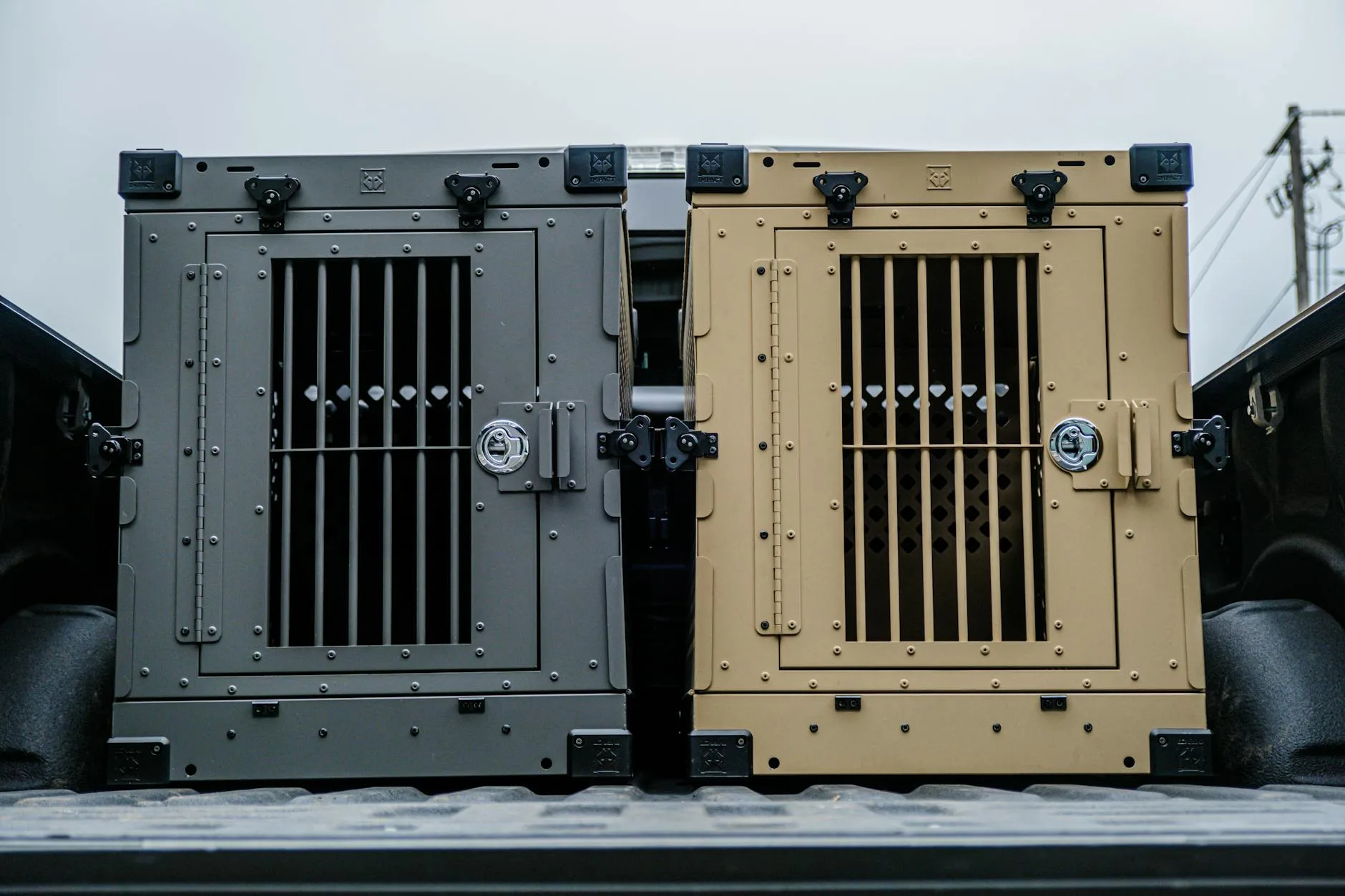
A properly sized car crate is the safest way to transport your dog. It’s also the most space-intensive option, which is why not everyone uses one.
Why Crates Are the Safest
In a collision, a crate contains your dog within a rigid structure. The dog can’t become a projectile, can’t escape through a broken window, and can’t interfere with airbags or the driver. Emergency services also prefer crated dogs because they can access injured passengers without worrying about a panicked animal. Having used both a crate and a harness with our spaniel over the years, the crate is noticeably less stressful for the dog on long journeys — she settles and sleeps rather than constantly adjusting her position.
Types of Car Crate
- Wire crates — collapsible, good ventilation, visible to the dog. Heavy (10-15kg for a large crate) and can rattle on rough roads. Best for: SUVs and estate cars with big boots.
- Plastic/airline crates — enclosed, quieter, easier to clean. Lighter than wire but bulkier when not in use. Best for: anxious dogs who prefer a den-like space.
- Custom-fitted metal crates — bolted into the boot of specific car models. The gold standard for safety but expensive (£300-800). Companies like TransK9 and Lintran make vehicle-specific crates. Best for: working dogs, frequent travellers, owners who prioritise safety above everything.
- Fabric soft crates — lightweight and collapsible but offer no crash protection. Fine for keeping a small, calm dog contained on short trips but not a safety device. Not recommended for anything over 10kg.
Sizing Your Crate
The crate should be large enough for your dog to stand, turn around, and lie down comfortably — but not so large that they slide around inside. Measure your dog from nose to base of tail (add 10cm) and from floor to top of head (add 5cm). Then measure your boot to make sure the crate actually fits. A crate that’s too big for your boot is useless.
Prices
- Wire crates (boot-sized): £40-80 from Pets at Home or Amazon UK
- Plastic airline crates: £50-120 depending on size
- Custom-fitted metal crates: £300-800 from specialist suppliers
- Fabric soft crates: £25-50
Dog Car Harnesses
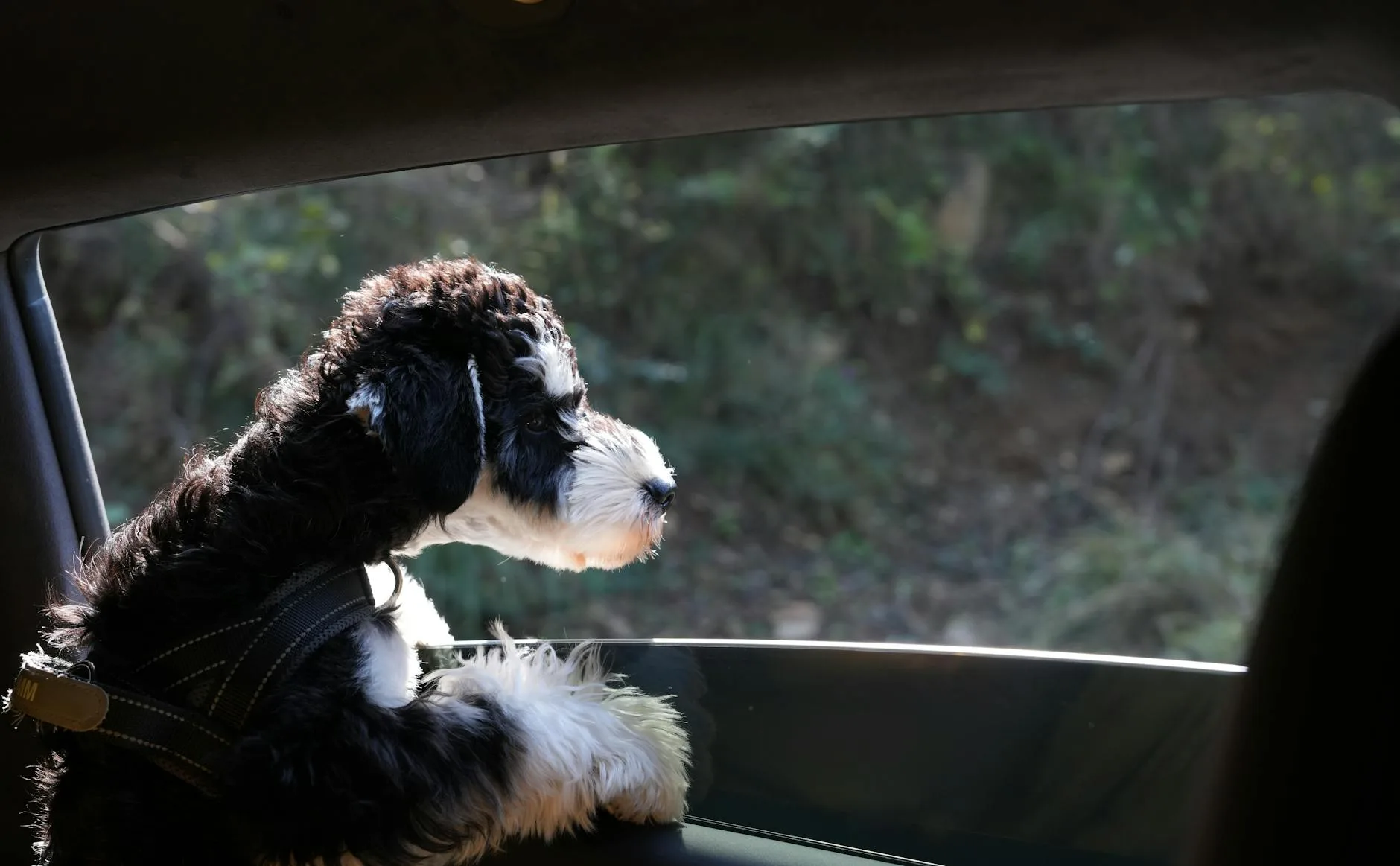
A harness clips your dog to the car’s seatbelt system, allowing them to sit on the back seat while being secured. It’s the most popular option for dogs that travel on the rear seats rather than in the boot.
How They Work
A dog car harness has two components: the harness itself (padded straps around the chest and torso) and a tether that clips to the car’s seatbelt buckle or ISOFIX anchor. In an emergency stop, the harness distributes the force across the dog’s chest rather than their neck — never attach a car tether to a collar, as this can cause fatal neck injuries.
The Crash-Testing Problem
Here’s something most retailers won’t tell you: the vast majority of dog car harnesses have never been crash-tested. A 2013 study by Subaru and the Center for Pet Safety in the US found that most pet harnesses failed catastrophically in simulated 30mph collisions. Clips snapped, stitching tore, and dummy dogs went flying. Only a handful of harnesses passed.
The Sleepypod Clickit Sport (about £65 from specialist retailers) is one of the few harnesses that has passed independent crash testing at speeds equivalent to 30mph. It’s not the cheapest option, but it’s the only one I’d trust in a real collision. The cheaper harnesses on Amazon (£10-20) keep your dog in one spot during normal driving, which satisfies the Highway Code, but they won’t protect your dog in a crash.
Comfort and Fit
A good car harness should:
- Fit snugly without restricting breathing — you should be able to slide two fingers under any strap
- Have padded chest and shoulder areas — hard nylon straps dig in on long journeys
- Allow the dog to sit and lie down — too short a tether and they can only stand
- Not rub or chafe — check for red marks after the first few short trips
Prices
- Budget harnesses: £10-25 (keep dog in place, no crash protection)
- Mid-range harnesses: £25-50 (better padding, still untested)
- Crash-tested harnesses (Sleepypod): £55-75
Boot Guards and Barriers
Boot guards are metal or mesh barriers that separate the boot from the rear passenger compartment. They don’t restrain your dog directly — your dog moves freely within the boot space — but they prevent the dog from jumping into the cabin. For a related angle, see our Best Dog Crates 2026 UK: Folding, Heavy Duty & Travel guide.
Universal vs Vehicle-Specific
- Universal boot guards (£30-60) — adjustable width to fit most cars. Held in place by pressure against the headlining and boot floor. Easy to install and remove. The downside is they can shift or pop out in a hard brake if not fitted tightly.
- Vehicle-specific guards (£80-200) — engineered to fit exact car models, usually bolt to the boot floor or headrest mounts. Much more secure than universal options. Travall is the biggest UK brand for vehicle-specific guards and covers most popular models.
When Boot Guards Make Sense
Boot guards work best for larger dogs in estate cars, SUVs, and hatchbacks with decent boot space. They give the dog room to move and lie down without confining them to a crate. Combined with a boot liner (see below), they create a comfortable travel space that’s easy to clean.
The limitation is that a boot guard alone doesn’t prevent injury during a collision — the dog can still be thrown around within the boot. For maximum safety, use a boot guard AND a short tether attached to a boot anchor point, or use a crate instead. If you’re wondering how this fits with your dog harness choice, most dogs that use boot guards don’t need a walking harness in the car — the guard itself keeps them contained.
Prices
- Universal adjustable guards: £30-60
- Vehicle-specific (Travall etc.): £80-200
Boot Liners and Seat Covers
These don’t restrain your dog at all — they protect your car from muddy paws, wet fur, and the occasional vomit.
Boot Liners
A fitted boot liner (£20-50) covers the floor and sides of your boot, protecting the carpet and paintwork. Look for waterproof, non-slip liners with raised edges to contain water and mud. Vehicle-specific liners fit best; universal ones tend to bunch up in the corners.
Rear Seat Covers
If your dog rides on the back seat (with a harness), a hammock-style seat cover (£20-40) protects the seats and creates a contained space. The hammock design prevents the dog from sliding into the footwell during braking. Some covers include mesh panels so you can see the dog through the headrest gap.
Material Matters
- Waterproof polyester — the standard. Wipes clean, dries fast, affordable. Most boot liners and seat covers use this.
- Quilted/padded covers — more comfortable for the dog, especially on long journeys. Adds insulation on cold boot floors.
- Rubber boot mats — the most durable and easiest to clean. Hose them off and they’re done. Heavier and less comfortable but virtually indestructible.
Which Option for Your Dog
Small Dogs (Under 10kg)
A car harness on the back seat is usually the best option. Small dogs fit comfortably on the rear seats, and the harness keeps them secure without taking up boot space. The Sleepypod Clickit Sport comes in sizes starting from S (for dogs from about 6kg). For very small dogs or puppies, a car seat booster (a raised padded seat that clips to the headrest, about £20-35) lets them see out of the window while being tethered. Our Best Dog Harnesses 2026 UK: No-Pull & Padded Options guide is useful alongside this.
Medium Dogs (10-25kg)
Either a harness on the back seat or a crate in the boot works well. If you have children in the back, a boot crate gives everyone their own space. If the back seat is free, a harness keeps the dog closer to you and makes them easier to check on during the journey.
Large Dogs (25kg+)
The boot is the practical option — a large dog on the back seat makes it unusable for passengers. A boot guard plus tether is the minimum. A custom-fitted metal crate is the safest but most expensive. For estate cars and SUVs, the TransK9 B20 range (from about £350) is purpose-built for large breed transport and bolts securely to the boot floor.
Multiple Dogs
If you’re transporting more than one dog, a boot divider or separate crates prevent squabbles and injuries. Two dogs loose in a boot will fight over space during a stressful journey. Separate them, and everyone calms down. Our guide on choosing healthy dog treats covers travel treats that can help keep dogs settled on longer journeys.
Crash-Tested vs Untested Products
The Hard Truth
Most dog car restraints sold in the UK have never been independently crash-tested. There is no legal requirement for crash testing — unlike child car seats, which must meet ECE R44 or R129 standards, dog restraints are essentially unregulated. This means a £15 harness from Amazon can claim to be a “safety harness” without ever proving it works.
What to Look For
- Center for Pet Safety (CPS) certification — the only independent crash-testing programme for pet travel products. Very few products pass. The Sleepypod Clickit and the Gunner Kennel are among the handful that do.
- TÜV tested — some European products carry TÜV certification for crash performance. Less common in the UK market but meaningful if you find it.
- “Crash-tested” marketing claims — treat with scepticism unless they specify who tested it and at what speed. Some brands test at low speeds (15mph) which proves nothing useful.
Does It Matter?
If you only ever drive at 20mph through residential streets, arguably less. If you’re doing motorway speeds with a 30kg dog in the car, it matters enormously. An unrestrained or poorly restrained dog at 70mph becomes a danger to every person in the vehicle. The physics doesn’t care about price — it cares about whether the restraint holds. We cover a similar decision in Dog Toy Safety: What to Look For.
Fitting and Installation Tips
Harness Fitting
- Adjust all straps with the harness OFF the dog first — get the approximate size right before wrestling with a wriggling spaniel
- Put the harness on and check the fit: two fingers under the chest strap, no bunching at the shoulders, the tether attachment point sits between the shoulder blades
- Clip the tether to the seatbelt buckle and adjust the length so the dog can sit, lie down, and turn around but can’t reach the front seats or the door handles
- Take a short 5-minute drive and check for any rubbing or chafing when you arrive
Crate Installation
- Measure your boot carefully — length, width, and height with the boot lid closed
- Place the crate on a non-slip mat to prevent it sliding
- Secure the crate with ratchet straps (for wire and plastic crates) or bolts (for custom-fitted crates). An unsecured crate in a boot becomes a heavy projectile in a collision — exactly the problem you’re trying to solve
- Add a comfortable pad or blanket inside. A familiar-smelling blanket from home helps anxious dogs settle
Boot Guard Fitting
- Follow the manufacturer’s instructions precisely — each brand mounts differently
- Test stability by pushing firmly from the boot side. If it flexes or moves more than a centimetre, it’s not secure enough
- Check that it doesn’t interfere with the boot lid closing mechanism
- Verify it doesn’t block your rear-view mirror visibility
Car Anxiety and Travel Sickness
Signs of Car Anxiety
- Drooling, panting, or trembling before or during the journey
- Refusing to get in the car — not just being stubborn but showing genuine fear
- Whining, barking, or destructive behaviour in the car
- Vomiting (which can be motion sickness, anxiety, or both)
Building Positive Associations
For dogs that hate the car, rushing them into a 3-hour motorway journey is the worst approach. Build up gradually:
- Let the dog explore the stationary car with treats and praise
- Sit in the car with the engine off for a few minutes
- Short engine-running sessions without moving
- Very short drives (literally to the end of the road and back)
- Gradually increase distance over weeks, always ending with something the dog enjoys (a walk, a treat, a play session)
This process takes patience — typically 2-4 weeks for a moderately anxious dog. It’s worth the investment because a dog that panics in the car is a safety risk regardless of what restraint you use.
Motion Sickness
Puppies are particularly prone to motion sickness because their inner ear structures haven’t fully developed. Most dogs grow out of it by 12-18 months. In the meantime, keeping the dog facing forward, ensuring good ventilation, and avoiding feeding within 2 hours of travel all help. The Royal Veterinary College recommends speaking to your vet about anti-nausea medication for dogs with persistent travel sickness.
Our Picks by Dog Size
Small Dogs: Sleepypod Clickit Sport, Size S (about £65)
The only crash-tested harness worth buying. Fits dogs from about 6kg. The padded vest design distributes force across the chest, and the three-point attachment to the seatbelt is genuinely secure. It doubles as a walking harness for the other end of the journey, which is convenient. Available from sleepypod.eu and specialist UK pet retailers.
Medium Dogs: Travall Vehicle-Specific Boot Guard (£80-150) + Tether
For medium dogs in the boot, a Travall guard matched to your specific car model combined with a short boot tether gives good security without the bulk of a crate. Available from travall.com with a fitment checker for your exact vehicle.
Large Dogs: TransK9 B20 Boot Crate (from about £350)
For large breeds, a TransK9 or Lintran custom-fitted metal crate is the safest option. They’re expensive but engineered specifically for dog transport, with crash-tested frames and vehicle-specific mounting points. Available direct from transk9.com. Once installed, these crates last the lifetime of the car.
Budget Pick: RAC Dog Car Harness (about £15, Halfords)
If budget is tight, the RAC-branded harness from Halfords satisfies the Highway Code requirement for restraint. It hasn’t been crash-tested, but it keeps your dog in one place during normal driving, which is better than nothing. Available in sizes from small to extra-large.
Frequently Asked Questions
Is it illegal to have a dog loose in the car in the UK? Not technically, but Highway Code Rule 57 requires dogs to be suitably restrained. If an unrestrained dog causes or contributes to an accident, you could be prosecuted for driving without due care and attention, which carries a fine of up to £2,500 and up to 9 penalty points.
Can dogs travel in the front seat? Yes, but it’s not recommended. An airbag deployment with a dog on the front seat can be fatal to the dog and dangerous for the driver. If your dog must ride in front, deactivate the passenger airbag and use a proper harness. The back seat or boot is always safer.
How do I stop my dog barking in the car? Persistent barking in the car is usually anxiety or over-stimulation. A crate with a blanket draped over it creates a calming den effect. For dogs that bark at things they see outside, a boot guard position (where they can’t see out of the side windows) often reduces the trigger. Adaptil spray on their blanket can also help calm nervous travellers.
Are dog seatbelts safe? Basic dog seatbelts (clip-to-collar tethers) are not safe — they can cause neck injuries in a sudden stop. A proper car harness that distributes force across the chest is much safer. The Sleepypod Clickit Sport is the only widely available harness that has passed independent crash testing at realistic collision speeds.
Can I use a child car seat for a small dog? No — child car seats are designed for human body shapes and proportions. A booster seat designed specifically for dogs (about £20-35) raises small dogs to window height while tethering them safely. These use harness attachments rather than the five-point harness system of child seats.