Your Labrador is a natural swimmer — bounds into every lake, river, and muddy puddle without hesitation. So you assume they’re fine in any water. Then you take them to the coast and the current is stronger than expected, the waves are bigger than they looked from the beach, and suddenly your “natural swimmer” is paddling hard and going nowhere. A dog life jacket isn’t just for dogs that can’t swim. It’s for dogs in any water where conditions can change, where fatigue is possible, or where you need a handle to grab if things go wrong.
In This Article
- Why Dogs Need Life Jackets
- When to Use a Dog Life Jacket
- Types of Dog Life Jackets
- How to Measure and Size a Dog Life Jacket
- Key Features to Look For
- Getting Your Dog Used to Wearing One
- UK Buying Recommendations
- Water Safety for Dogs in the UK
- Care and Maintenance
- Frequently Asked Questions
Why Dogs Need Life Jackets
Not All Dogs Are Natural Swimmers
Some breeds struggle in water. Bulldogs, Dachshunds, Pugs, and Corgis have body shapes — short legs, heavy chests, flat faces — that make swimming difficult or exhausting. Brachycephalic breeds (flat-faced) are particularly at risk because they have to tilt their heads back further to breathe, which pushes their rear ends down.
But it’s not just about breed. Older dogs lose stamina. Puppies haven’t learned to swim efficiently. Dogs with arthritis or injuries tire faster. Even strong swimmers can struggle in cold water, strong currents, or choppy conditions they haven’t encountered before.
Fatigue Is the Real Danger
Dogs, like humans, can swim confidently for a while and then hit a wall. Unlike humans, dogs don’t signal distress clearly — they keep paddling until they physically can’t. By the time you notice your dog is struggling, they may be too far out or too tired to make it back. A life jacket keeps them buoyant when their legs give out, buying you time to reach them.
The Handle Changes Everything
Every dog life jacket has a handle on the back. This handle is why experienced boat owners, kayakers, and coastal dog walkers use life jackets even on strong swimmers. If your dog falls off a paddleboard, gets swept by a current, or simply needs help getting back onto a boat, that handle lets you grab them securely and lift. Without it, you’re trying to grip a wet, panicking animal by the scruff or collar — which is neither safe nor effective.
When to Use a Dog Life Jacket
Always Use One
- Boats and kayaks — dogs fall off. Even on calm water, a wake from a passing boat can knock them in. The Royal Yachting Association recommends life jackets for all dogs on boats
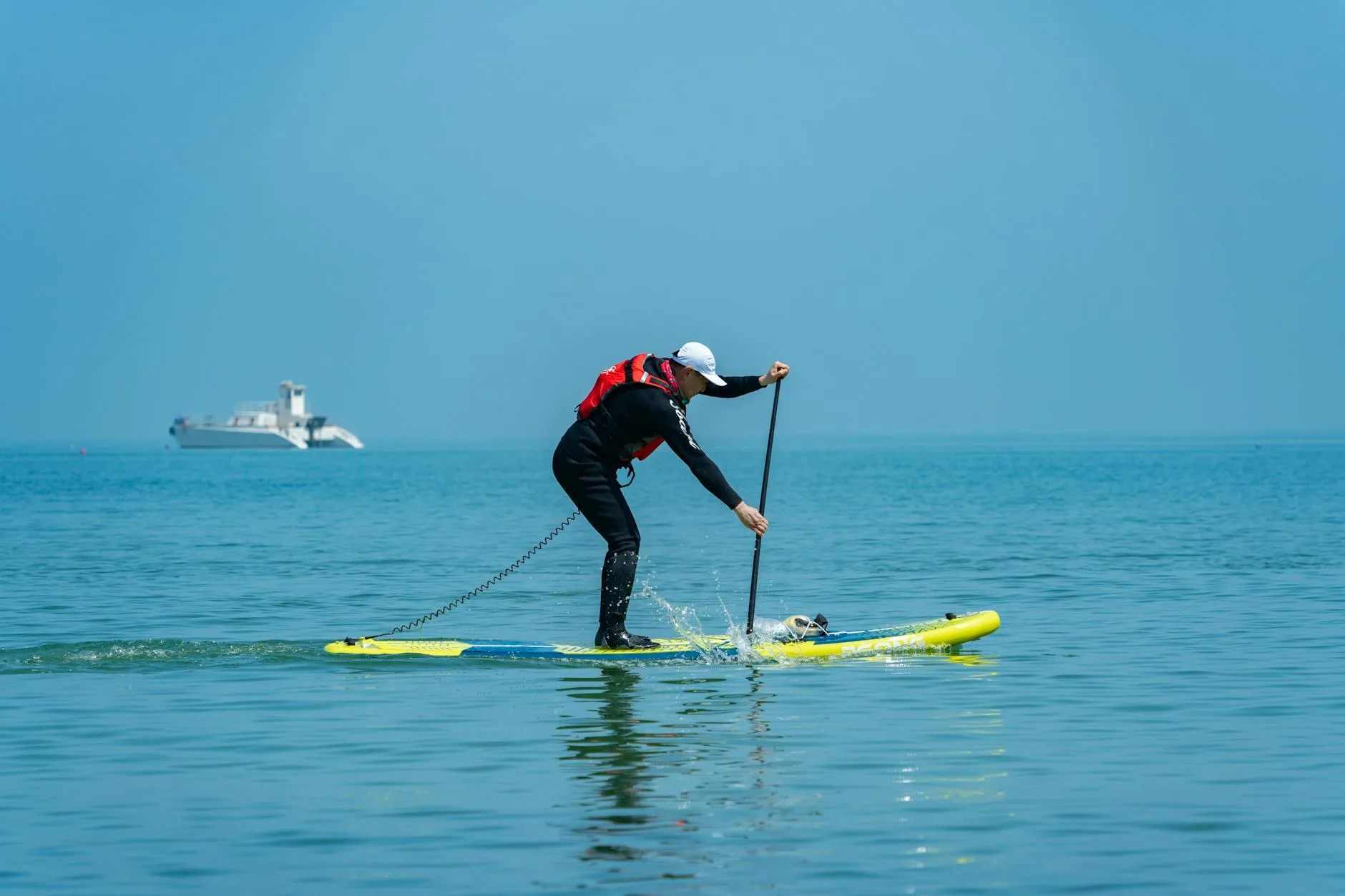
- Paddleboarding — your dog will fall off. It’s not a question of if, it’s when
- Coastal swimming — currents, waves, and tides make the sea unpredictable. Even in calm-looking water, rip currents can carry a dog away from shore
- River swimming — current strength varies along a river and can change with recent rainfall
Strongly Recommended
- First time swimming — puppies and dogs new to water benefit from the confidence boost. The buoyancy lets them learn proper paddling technique without exhausting themselves
- Cold water — UK lakes and rivers are cold, even in summer. Cold water drains energy faster than warm. A life jacket extends your dog’s safe swimming time
- Dogs with health conditions — arthritis, hip dysplasia, heart conditions, or recovering from surgery
Probably Not Necessary
- Shallow paddling in a stream or lake edge where the dog can stand
- Your garden paddling pool — unless your dog is tiny and the pool is deep
Types of Dog Life Jackets
Standard Flotation Vest
The most common type. Panels of buoyant foam (usually closed-cell PVC foam) on the chest, sides, and back. Adjustable straps around the neck and belly. A top handle for lifting.
- Best for: general use — swimming, boats, coastal walks
- Price range: £15-50
Performance Swim Vest
Lighter, more streamlined, with less bulk. Designed for dogs that swim regularly and need buoyancy assistance without being weighed down. Less foam but strategically placed for swimming posture.
- Best for: active swimming dogs, dock diving, regular water activities
- Price range: £25-60
Full Coverage Vest
Maximum buoyancy with foam coverage from neck to tail. Additional belly panels keep the dog level in the water. Often includes a chin rest to keep the head above water.
- Best for: non-swimming breeds, very young puppies, elderly or disabled dogs, rough water conditions
- Price range: £30-70
How to Measure and Size a Dog Life Jacket
Getting the right size is critical. Too loose and the jacket rides up, restricting the dog’s head movement or slipping off entirely. Too tight and it restricts breathing and movement.
What to Measure
- Girth (chest): measure around the widest part of the ribcage, just behind the front legs. This is the most important measurement
- Length (back): measure from the base of the neck (where the collar sits) to the base of the tail
- Neck: measure around the base of the neck where a collar sits. Not as critical as girth but helps narrow down sizes
- Weight: most life jackets use weight ranges alongside measurements. A dog at the top of a weight range often fits better in the next size up
Fitting Tips
- The jacket should be snug but not tight. You should be able to slide two fingers under any strap
- All straps should be adjusted before water use. Test the fit on dry land first — walk the dog around, let them lie down and stand up. Adjust anything that shifts
- The handle should be centred on the dog’s back, roughly over their centre of gravity. If the handle is too far forward or back, the dog will tilt when you lift
- No rubbing under the legs. Check the front leg openings — irritation here is the most common fit problem. The openings should be wide enough to allow full range of motion without gaps large enough for legs to slip through
For guidance on what to put your dog in on dry land, our guide to choosing a harness vs collar covers everyday options.
Key Features to Look For
Dorsal Handle
The single most important feature. It should be strong (reinforced stitching, wide webbing), well-positioned (over the centre of gravity), and rigid enough to support the dog’s weight when lifting. Test it by picking up the jacket — if the handle feels flimsy, the jacket isn’t up to the job.
Adjustable Straps
Minimum of two adjustment points — neck and belly. Better jackets have three or four, allowing fine-tuning for different body shapes. Quick-release buckles make putting on and taking off faster and less stressful.
Reflective Elements
Strips or panels of reflective material on the jacket. Essential for low-light conditions and highly visible in water. If your dog swims in early morning or evening light, reflective elements help you track them. Bright colours (orange, yellow, red) are also important for visibility — avoid dark or camouflage patterns that blend with water. For a related angle, see our Best Cat Litter 2026 UK: Clumping, Crystal & Wood Pellet guide.
D-Ring for Lead Attachment
A D-ring on the back lets you clip a lead to the life jacket instead of a collar. Useful for control near water before letting the dog swim, and for securing the dog on a boat.
Chin Rest / Front Float
Some jackets have a buoyancy panel under the chin that supports the dog’s head above water. Particularly important for:
- Brachycephalic breeds that struggle to keep their airways clear
- Exhausted dogs whose heads start to drop
- Unconscious or semi-conscious dogs (in emergency situations)
Getting Your Dog Used to Wearing One
Most dogs don’t love wearing things. A gradual introduction prevents the jacket becoming a source of stress.
Introduction Steps
- Let the dog sniff and investigate the jacket. Reward with treats. Don’t rush to put it on
- Drape it over the dog’s back without fastening. Treat and praise. Remove after 30 seconds
- Fasten it loosely for a short session indoors. Let the dog walk around, sit, and lie down. Treat generously. Remove after 2-3 minutes
- Tighten to proper fit and repeat the indoor session. Gradually extend the wearing time over several days
- First water session: shallow water where the dog can stand. Let them walk in, feel the buoyancy, and wade back out. Keep it positive — treats, toys, encouragement
Signs of a Good Fit in Water
- The dog swims in a natural horizontal position, not tilted nose-up or rear-down
- All four legs paddle freely without restriction
- The jacket doesn’t ride up toward the head
- The dog can shake off water without the jacket shifting
For broader health monitoring, our guide to keeping dogs cool in summer covers water safety in hot weather.
UK Buying Recommendations
Best Overall: Ruffwear Float Coat (about £60-75)
The benchmark for dog life jackets. Strong construction, excellent handle, reflective trim, and a design that keeps dogs level in the water. Available from most UK pet retailers and Amazon. Ruffwear’s sizing is accurate — measure your dog and trust the chart.
Best Budget: Red Dingo Swim Buddy (about £20-25)
Solid construction at a fraction of the premium price. Good handle, adjustable straps, bright colours. Less foam than the Ruffwear, so it provides less buoyancy in rough conditions, but excellent for lake and river swimming. Available from Pets at Home and Amazon UK.
Best for Flat-Faced Breeds: EzyDog Doggy Flotation Device (about £45-55)
The integrated chin rest is specifically designed to support brachycephalic breeds. Excellent build quality, multiple adjustment points, and a strong rescue handle. Available from specialist pet retailers and Amazon UK.
Best for Small Dogs: Julius-K9 IDC Waterproof (about £30-40)
Sized accurately for small dogs without the fit problems that plague scaled-down large-dog designs. Light enough not to overwhelm a Chihuahua but buoyant enough to keep a Dachshund afloat. Our guide to dog toy safety covers other safety considerations for smaller breeds.
Water Safety for Dogs in the UK
Blue-Green Algae
Toxic algae blooms appear in UK lakes and reservoirs, particularly in warm weather from June to September. Blue-green algae (cyanobacteria) can be fatal to dogs who swim in or drink contaminated water. Symptoms appear within hours: vomiting, diarrhoea, seizures, and collapse. Our Dog Car Safety: Crates, Harnesses & Boot Guards Explained guide is useful alongside this.
Prevention: check local signage, avoid water that looks green, scummy, or has a bad smell. The Environment Agency and local councils post warnings when blooms are detected. If in doubt, don’t let your dog swim.
Cold Water Shock
UK water is cold — even in August, many lakes and rivers sit at 12-18°C. Dogs can experience cold water shock just like humans. A life jacket helps because a fatigued, cold dog stays afloat.
Currents and Tides
Rivers after heavy rain carry deceptively strong currents. Coastal areas have tidal currents that change by the hour. Check conditions before letting your dog swim. If you wouldn’t swim in it yourself, don’t let your dog.
Exit Points
Before letting your dog into water, identify how they’ll get out. Steep banks, slippery rocks, and canal walls with no ramp can trap a dog in the water even if the swimming conditions are fine. The life jacket’s handle lets you lift the dog out, but prevention is better — choose swimming spots with gentle, accessible entry and exit points.
Care and Maintenance
After Every Use
- Rinse with fresh water — especially after saltwater or lake swimming. Salt, algae, and bacteria degrade materials and cause odours
- Allow to air dry completely before storing. Damp storage causes mildew inside the foam panels
- Check straps and buckles for sand, grit, or damage. Sand in buckles causes premature wear
Periodic Checks
- Inspect stitching every few months, particularly around the handle and D-ring. These bear the most stress
- Check buoyancy — drop the jacket in water. It should float high and immediately. If it sits low, the foam may be waterlogged or degraded
- Replace if the foam feels compressed, straps are fraying, or buckles don’t lock securely. A life jacket that fails in use is worse than none at all
Storage
Store flat or hung in a dry, ventilated space. Don’t compress under heavy items — this permanently deforms the foam and reduces buoyancy.
Frequently Asked Questions
Can a dog life jacket replace swimming lessons? No. A life jacket provides buoyancy and safety, but dogs still need to learn basic swimming technique. Introduce your dog to water gradually in shallow, calm conditions, with or without a jacket. The jacket is a safety net, not a substitute for water confidence.
My dog is a strong swimmer — do they still need a life jacket? In controlled, calm conditions like a familiar lake, a strong swimmer may not need one. But in open water, coastal conditions, on boats, or in cold water, a life jacket adds a safety margin that even strong swimmers benefit from. The handle alone justifies it for boat trips.
How tight should the life jacket be? Snug enough that it doesn’t shift when the dog moves, but loose enough to slide two fingers under any strap. The dog should be able to breathe freely, move all four legs without restriction, and sit and lie down comfortably. If the dog seems uncomfortable or their movement is restricted, adjust or try a different size.
Can puppies wear life jackets? Yes, once they’re large enough for the smallest size available (usually from about 4-5kg). Puppies benefit more from life jackets than adult dogs because they tire quickly and haven’t developed efficient swimming technique. Always supervise puppies near water, jacket or not.
How do I clean a dog life jacket? Hand wash with mild soap and warm water after saltwater or dirty water use. Most jackets shouldn’t go in the washing machine — the agitation can damage foam panels and delaminate waterproof coatings. Rinse thoroughly and air dry completely before storage.