You’ve just committed to getting a puppy and your older dog has no idea their world is about to change. Maybe they’ve been the only pet for years. Maybe they’re not exactly thrilled about sharing your attention, the sofa, or their favourite chew toy. The introduction between a new puppy and a resident dog can go beautifully or spectacularly wrong — and the difference almost always comes down to how you manage those first few encounters.
In This Article
- Before the Puppy Arrives
- The First Meeting: Neutral Ground
- Bringing the Puppy Home
- The First Week Together
- Managing Resources and Jealousy
- Reading Body Language
- Common Problems and How to Handle Them
- Age and Breed Considerations
- When to Seek Professional Help
- The Timeline: What to Expect
- Frequently Asked Questions
Before the Puppy Arrives
The work starts before the puppy sets foot in your house. Preparation sharply increases the odds of a smooth introduction.
Prepare Separate Spaces
Your older dog needs a retreat — somewhere the puppy cannot access. This isn’t punishment; it’s giving your existing dog control over their own environment.
- Set up a puppy zone — a puppy pen or gated area in a separate room. The puppy sleeps, eats, and spends unsupervised time here
- Protect your older dog’s favourite spots — if they have a preferred bed, crate, or corner, keep the puppy away from it initially
- Create escape routes — baby gates that your older dog can jump over but the puppy can’t. This lets your resident dog choose when to engage and when to retreat
Refresh Basic Training
If your older dog’s recall or “leave it” command has gone rusty, brush up now. You’ll need reliable verbal control during the introduction period. A solid recall lets you redirect your older dog calmly without physically intervening, which reduces tension for everyone.
Stock Up on Resources
Resource guarding is the single biggest source of conflict between a resident dog and a new puppy. Eliminate the triggers:
- Two of everything — separate food bowls, water bowls, beds, and toy baskets
- High-value chews — each dog gets their own, in separate rooms. Never let a puppy approach an older dog with a bone or chew
- Treats — you’ll use a lot during the first two weeks. Have plenty of your older dog’s favourites ready
Health Check
Ensure your older dog’s vaccinations are current and they’re in good health. Puppies carry different bacterial flora and can be energetically overwhelming. If your older dog has joint pain, arthritis, or is recovering from illness, discuss the timing with your vet — a bouncy puppy landing on sore joints creates negative associations fast.
The First Meeting: Neutral Ground
The first face-to-face meeting should happen outside your home — in a park, a neighbour’s garden, or any space that neither dog considers “theirs.”
How to Run the Introduction
- Walk them in parallel — one handler per dog, walking in the same direction about 3 metres apart. Let them notice each other without direct interaction
- Gradually reduce distance — over 10-15 minutes, bring the walking paths closer. Watch body language constantly
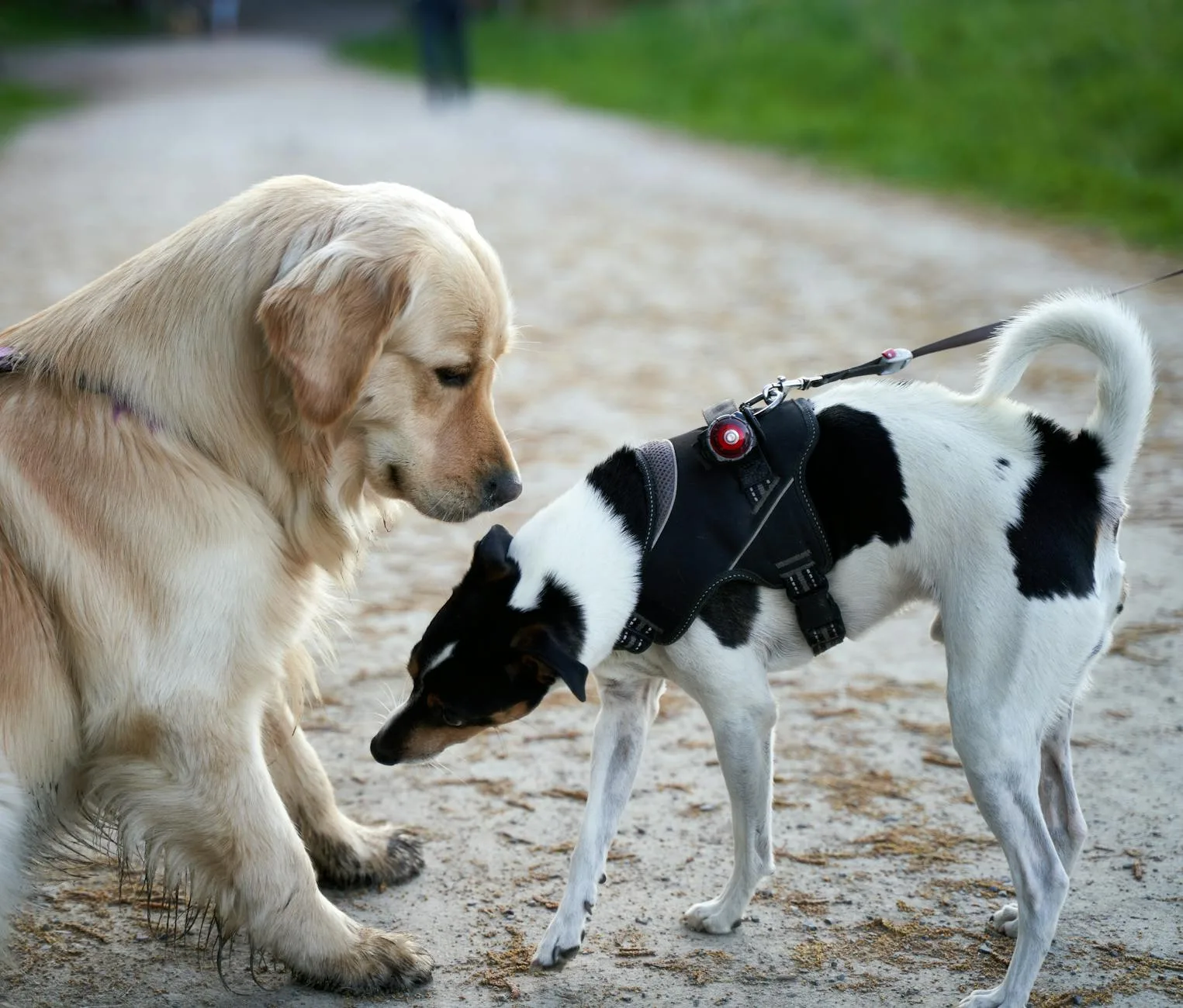
- Allow a brief sniff — when both dogs seem calm, let them approach on loose leads for a 3-5 second sniff. Then separate and walk again
- Keep it short — 15-20 minutes maximum for the first meeting. End on a positive note while both dogs are still relaxed
What You’re Looking For
Positive signs during the first meeting:
- Loose, wiggly body language — relaxed tail wag, soft eyes, play bow
- Sniffing each other’s rear end — this is polite dog greeting behaviour
- Looking away or turning sideways — these are calming signals that show the dog is non-threatening
Warning signs to watch for:
- Stiff body, hard stare — tension. Increase distance immediately
- Raised hackles — arousal, not necessarily aggression, but worth separating
- Growling or lip curling — your older dog is communicating a boundary. Respect it by moving the puppy away calmly
- Whale eye (showing whites) — stress signal. The dog needs more space
Bringing the Puppy Home
After the neutral meeting, it’s time to bring the puppy into your home. This is where your preparation pays off.
The Arrival Sequence
- Let your older dog into the house first — they should be settled in their normal space when the puppy arrives
- Bring the puppy straight to their designated area — puppy pen or gated room. Let them explore their space without the older dog present
- Allow a supervised meeting inside — after the puppy has settled for 30-60 minutes, bring both dogs into a common area on leads
- Keep it brief — 5-10 minutes of supervised interaction, then separate. Multiple short sessions are better than one long one
The First Night
The puppy sleeps in their own space — not in your older dog’s room or bed area. Your older dog’s routine should change as little as possible on the first night. They eat at the same time, walk at the same time, and sleep in the same place. The message is: “Nothing has changed for you. There’s just an addition.”
Expect whining from the puppy. Resist the urge to bring them to your older dog for comfort — the puppy needs to learn independence, and your older dog hasn’t signed up for babysitting duty.
The First Week Together
Supervised Interaction Only
For the entire first week, every moment the dogs spend together should be supervised. No exceptions. Leave the room? Separate them. Even if they seem fine — puppies are unpredictable, and an older dog’s tolerance has limits.
Building Positive Associations
Your older dog needs to associate the puppy with good things happening:
- Treat both dogs simultaneously — when they’re in the same room being calm, both get treats. The older dog learns: puppy present = rewards
- Parallel activities — feed them in sight of each other but at a distance. Walk them together (two handlers helps enormously in the first week)
- Praise calm interactions — when your older dog sniffs the puppy gently, tolerates their presence, or lies down near them, reward that behaviour quietly
Protecting Your Older Dog’s Downtime
Puppies are exhausting. They bite, jump, pounce, and have no concept of personal space. Your older dog will need breaks — enforced ones, not optional.
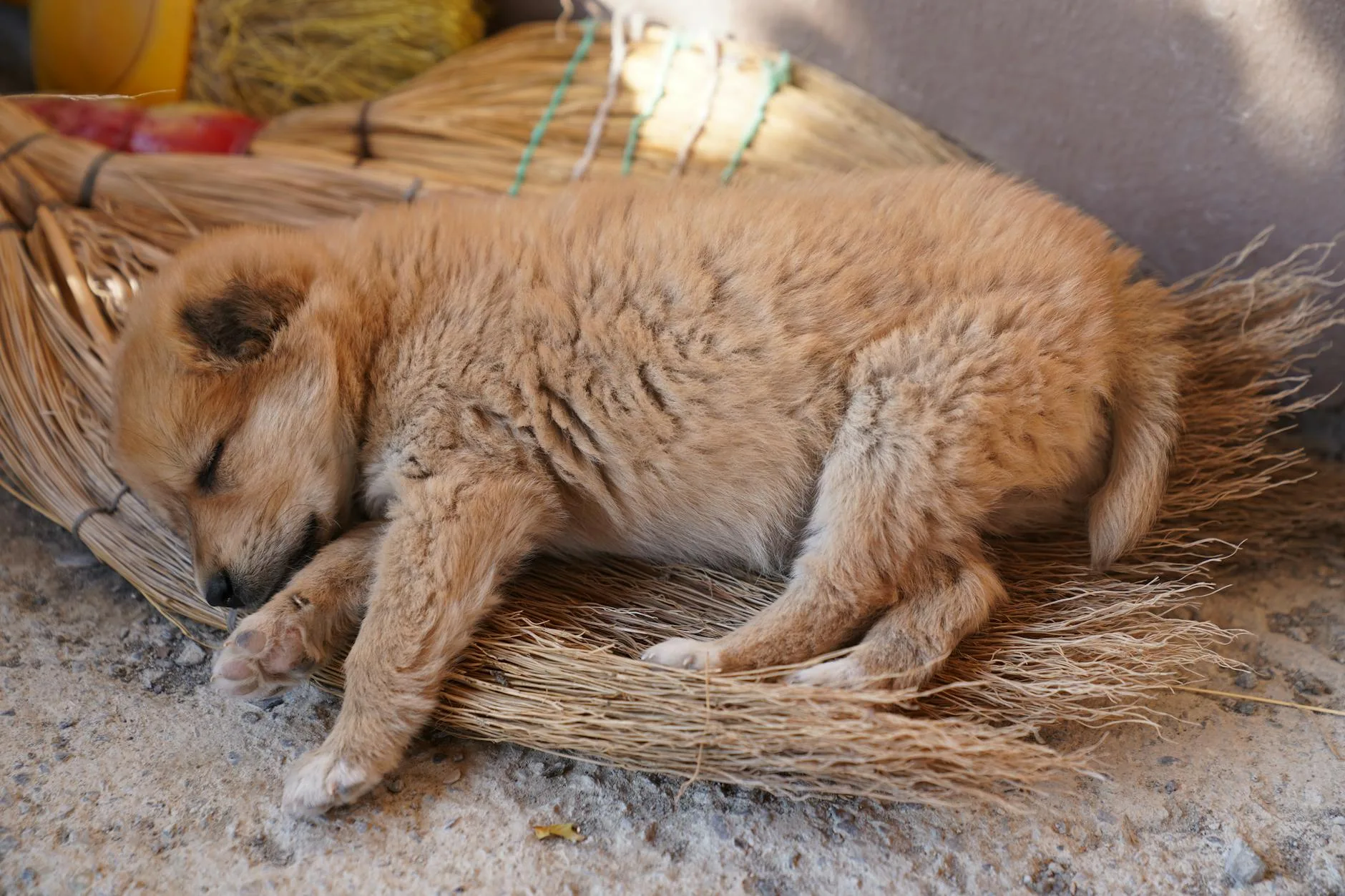
- Puppy nap schedule — puppies need 18-20 hours of sleep. Enforce nap times in the puppy pen. This gives your older dog guaranteed peace
- One-on-one time — walk your older dog solo at least once a day during the first week. They need to feel they haven’t been replaced
- Let your older dog correct the puppy — a short growl or air snap when the puppy is being too much is normal, appropriate communication. Don’t punish your older dog for setting boundaries. Only intervene if the correction escalates to sustained aggression
Managing Resources and Jealousy
Feeding
Feed the dogs in separate rooms for at least the first month. Even relaxed dogs can become defensive over food when a new animal enters the household. According to the RSPCA, resource guarding over food is one of the most common triggers for inter-dog conflict in multi-dog households. For a related angle, see our Best Puppy Food 2026 UK: From Weaning to 12 Months guide.
- Feed your older dog first — they have seniority
- Feed in separate rooms with doors closed
- Pick up bowls after eating — no grazing
- Gradually move bowls closer over weeks, not days
Toys and Chews
- Remove high-value items during shared time. Bones, stuffed Kongs, and favourite toys should only appear when dogs are separated
- Provide plenty of individual toys — but accept that the puppy will try to steal everything. Redirect rather than scold
- Watch for guarding behaviour — stiffening over a toy, hovering, taking items to corners. If you see this, manage the environment rather than correcting the dog
Your Attention
This is the resource most owners forget about. Your older dog will notice every moment of attention the puppy receives. Make a conscious effort to greet your older dog first, feed them first, and give them focused attention daily. It sounds like favouritism — it’s actually just maintaining the social structure that keeps your older dog secure.
Reading Body Language
Understanding what both dogs are communicating prevents most problems from escalating.
Older Dog Stress Signals
- Turning away repeatedly — “I don’t want to engage”
- Lip licking when not eating — mild anxiety
- Yawning — stress, not tiredness (in this context)
- Moving to another room — they need space. Let them go
- Freezing in place — high tension. Quietly remove the puppy
Puppy Overexcitement Signals
- Biting at the older dog’s ears, tail, or legs — normal play behaviour but excessive for an older dog’s tolerance
- Body-slamming — the puppy thinks this is hilarious. The older dog does not
- Persistent following — the puppy won’t leave the older dog alone. Time for a puppy pen break
Healthy Play Between the Two
When things are going well, you’ll see:
- Role reversal — sometimes the older dog chases, sometimes they’re chased
- Self-handicapping — the older dog plays gently, lies down to the puppy’s level, or mouths softly
- Natural pauses — they play, stop, sniff around, then choose to play again. Forced, non-stop play without breaks is overstimulation
Common Problems and How to Handle Them
The Older Dog Ignores the Puppy Completely
This is actually fine in the first week. Indifference is better than hostility. Don’t force interaction — let your older dog come around on their own timeline. Most dogs warm up within 2-4 weeks.
The Older Dog Growls or Snaps
A single growl or air snap is normal communication — the older dog is saying “that’s too much.” Don’t punish this. If you suppress growling, the older dog loses their warning system and may escalate directly to biting next time. Instead, redirect the puppy to give the older dog space.
If snapping becomes frequent, persistent, or makes contact, increase supervision and reduce shared time. This is the older dog telling you they need more distance.
The Puppy Won’t Stop Pestering
Puppies don’t understand social cues yet. They’ll pester an older dog long past the point of tolerance. This is where enforced separation is essential:
- Puppy pen time after every 20-30 minutes of interaction
- Redirect with a chew or training game — give the puppy something else to focus on
- Tire the puppy out with a solo play session before shared time. A tired puppy is a calmer puppy
The Older Dog Regresses Behaviourally
Some older dogs start having toileting accidents, become clingy, or lose interest in food during the adjustment period. This is stress-related and temporary. Maintain their routine, give extra one-on-one attention, and consult your vet if it persists beyond two weeks.
Age and Breed Considerations
Older Dogs (8+ Years)
Senior dogs have lower energy, less patience, and potentially joint issues that make a bouncy puppy physically uncomfortable. Shorter supervised sessions, more enforced separation, and a longer adjustment timeline (4-8 weeks) are essential. Consider whether a calmer rescue adult dog might be a better match than a puppy for a senior resident. Our How to House Train a Puppy: The Complete Guide guide is useful alongside this.
Breed Temperament
- Sociable breeds (Labradors, Golden Retrievers, Spaniels) — generally adapt faster but can overwhelm a puppy with their own enthusiasm
- Independent breeds (Shiba Inu, Akita, Basenji) — may take longer to accept a new dog. More management needed, not less
- Terriers — high prey drive can be triggered by a small, squeaky puppy. Extra caution in early interactions
- Guarding breeds (German Shepherds, Rottweilers) — often excellent with puppies they recognise as “family” but need careful, controlled introductions
Same-Sex Pairings
Two dogs of the same sex are statistically more likely to have conflict, particularly two unneutered males. This doesn’t mean it won’t work — it means more management, more supervision, and more patience. Opposite-sex pairings generally settle faster, though individual temperament matters far more than gender as a rule.
When to Seek Professional Help
Most introductions work out with patience and proper management. But some situations need expert intervention:
- Sustained aggression — not a warning snap, but prolonged, intense aggression where the older dog is actively pursuing the puppy
- Injury — if either dog breaks skin, separate immediately and consult a behaviourist before reintroducing
- Persistent fear — if the puppy becomes terrified of the older dog (cowering, hiding, refusing to eat), the dynamic needs professional assessment
- No improvement after 4-6 weeks — some dogs need professional introduction protocols that go beyond what most owners can manage alone
Look for an ABTC-registered animal behaviourist (the Association of Animal Behaviour and Training Council — abtc.org.uk). Avoid uncertified “dog trainers” for inter-dog aggression issues. The wrong approach can make things much worse.
If you’re still deciding on a harness setup for walking both dogs, getting the right gear before introductions begin makes the parallel walks much easier to manage.
The Timeline: What to Expect
Week 1-2
Careful, supervised interactions. Lots of separation. Your older dog may seem annoyed, indifferent, or cautious. The puppy will be persistent and annoying. This is normal.
Week 3-4
Interactions become more natural. You might see the first genuine play session. Your older dog starts tolerating the puppy for longer periods. Still supervise all shared time.
Month 2-3
The relationship develops its own rhythm. Your older dog sets clear boundaries that the puppy begins to respect. Shared napping might start — this is the gold standard sign that they’re comfortable.
Month 3-6
Most pairs are settled by this point. They’ve established their own communication patterns, play styles, and routines. You can start reducing supervision gradually, but still separate for feeding and high-value chew time.
The Reality Check
Some dogs become best friends. Some tolerate each other politely. A small percentage never fully accept a new addition. All three outcomes are okay. The goal isn’t forced friendship — it’s peaceful coexistence with as little stress as possible for both dogs.
Frequently Asked Questions
How long does it take for an older dog to accept a new puppy? Most dogs settle into a routine within 3-6 weeks. Full acceptance — relaxed coexistence, shared play, resting near each other — typically takes 2-3 months. Some pairs take longer, and a small percentage need ongoing management to coexist peacefully.
Should I let my older dog correct the puppy? Yes, within reason. A growl, air snap, or brief pin is normal communication that teaches the puppy appropriate boundaries. Don’t punish your older dog for these corrections — they’re preventing bigger problems. Only intervene if corrections become sustained, aggressive, or make physical contact that could injure the puppy.
Is it better to get a puppy of the opposite sex? Opposite-sex pairings statistically settle more easily, particularly if both dogs are neutered. Same-sex pairings can work perfectly well but may require more management during the introduction period. Individual temperament matters more than sex in most cases.
My older dog is growling at the puppy — is this normal? Yes. Growling is how dogs communicate “I need space” or “that’s too much.” It’s a healthy warning signal. Don’t punish growling — redirect the puppy instead. If growling becomes constant or escalates to snapping with contact, increase separation time and consider consulting a behaviourist.
Can I leave my older dog and new puppy alone together? Not during the first month. All shared time should be supervised until you’re confident both dogs are comfortable and the puppy has learned to respect the older dog’s boundaries. Even then, separate them when you leave the house for at least the first 3 months.