Your dog just stole a sock off the radiator, sprinted through the kitchen, and is now under the dining table looking extremely pleased with themselves. You’re standing in the hallway trying to decide whether to shout, chase, or pretend it didn’t happen. Positive reinforcement training wouldn’t have prevented the sock theft — dogs will always be dogs — but it gives you a way to handle it that actually works, builds your relationship rather than damaging it, and makes future sock incidents less likely. Here’s how it works in practice, not just in theory.
In This Article
- What Positive Reinforcement Actually Means
- Why It Works: The Science
- Positive Reinforcement vs Other Methods
- Getting Started: The Basics
- The Five Essential Commands
- Choosing the Right Rewards
- Timing: Why Speed Matters
- Clicker Training Explained
- Common Mistakes Beginners Make
- Dealing with Unwanted Behaviour
- When to Get Professional Help
- Frequently Asked Questions
What Positive Reinforcement Actually Means
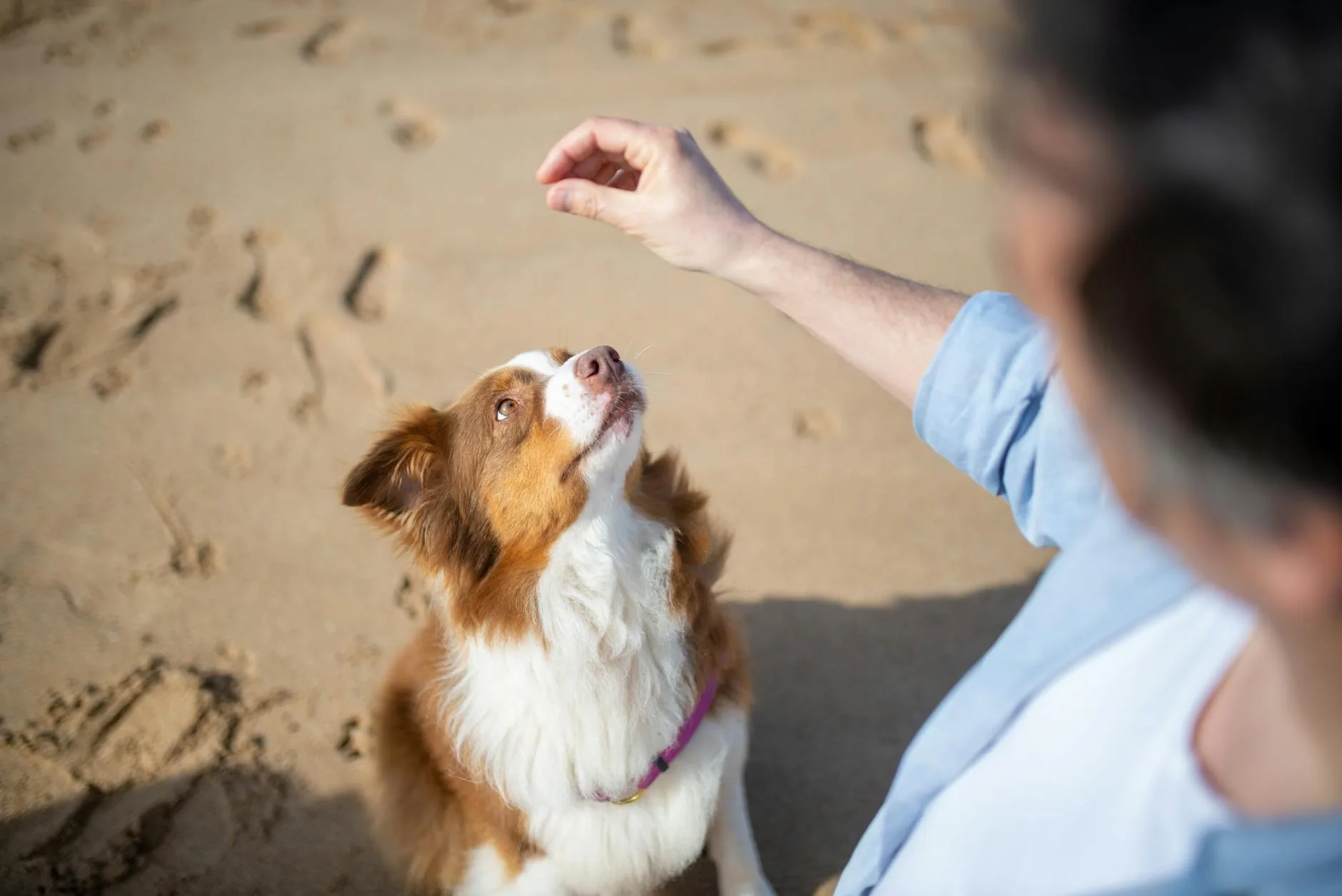
Positive reinforcement is simple in principle: when your dog does something you want, you reward them. The reward increases the likelihood they’ll repeat the behaviour. That’s it. No magic, no complicated theory — just the consistent pairing of desired behaviour with something the dog enjoys.
What Counts as “Positive”
In behavioural science, “positive” doesn’t mean good or happy — it means adding something. Positive reinforcement adds a reward after a behaviour. The reward can be:
- Food treats — the most commonly used and most effective for most dogs
- Verbal praise — “good boy/girl” in an enthusiastic tone
- Physical affection — stroking, scratching behind the ears
- Play — a quick game of tug or fetch
- Access — opening the door to the garden, letting them greet a visitor
What It Isn’t
Positive reinforcement doesn’t mean permissive. You don’t let the dog do whatever it wants. You don’t ignore bad behaviour entirely. And you don’t bribe the dog — showing the treat first and then asking for the behaviour is bribery, not training. The reward comes after the behaviour, not before.
Why It Works: The Science
Operant Conditioning
Positive reinforcement is based on operant conditioning, a principle demonstrated by psychologist B.F. Skinner in the 1930s. The core finding: behaviours followed by pleasant consequences are repeated more frequently. Behaviours followed by unpleasant consequences (or no consequences) decrease. This applies to every animal capable of learning, from pigeons to people.
The Dog’s Perspective
Dogs are constantly learning from consequences. When sitting produces a treat, sitting becomes more frequent. When jumping on guests produces attention (even negative attention — shouting is still attention), jumping continues. Positive reinforcement works with this natural learning process rather than against it.
The Animal Behaviour and Training Council (ABTC) — the UK’s regulatory body for animal trainers — recognises positive reinforcement as the gold standard for pet training. Their accredited trainers are required to use evidence-based methods.
Why Punishment-Based Training Fails
Punishment suppresses behaviour temporarily but doesn’t teach the dog what you actually want. A dog punished for jumping on guests learns that jumping is dangerous when you’re nearby — so they jump when you’re not looking. A dog rewarded for sitting when guests arrive learns that sitting is profitable — so they sit whether you’re watching or not.
Research published in the Journal of Veterinary Behavior consistently shows that punishment-based methods increase fear and aggression in dogs while producing no better obedience outcomes than reward-based methods.
Positive Reinforcement vs Other Methods
Dominance Theory (Debunked)
The idea that dogs form rigid hierarchies and owners must establish “alpha” status has been thoroughly disproven. It was based on studies of captive wolves in the 1940s — wolves that weren’t even from the same pack. The original researcher, David Mech, has spent decades trying to correct the misinterpretation. Modern wolf research shows that wild packs are family groups, not dominance hierarchies.
“Alpha rolls,” leash corrections, and intimidation tactics create fear, not respect. If your trainer talks about being the pack leader, find a different trainer.
Balanced Training
“Balanced” training uses both rewards and corrections (positive reinforcement and positive punishment). While common, the corrections component introduces risks — poorly timed corrections can increase anxiety and damage the dog-owner relationship. Most veterinary behaviourists recommend reward-based methods first, with corrections reserved for truly dangerous behaviours under professional guidance.
Pure Positive
Some trainers advocate using only positive reinforcement with zero corrections of any kind. In practice, most positive reinforcement trainers use a combination of rewarding desired behaviour and managing the environment to prevent unwanted behaviour (rather than correcting it after the fact). The label matters less than the outcome — if your dog is learning, enjoying training, and not showing signs of stress, the method is working.
Getting Started: The Basics
Create a Distraction-Free Environment
Start training in your home with no other people, no other dogs, and no interesting smells. The kitchen or a quiet room works well. Once the dog reliably performs a behaviour at home, gradually add distractions — the garden, the street, the park. This progression from easy to hard is called “proofing.”
Keep Sessions Short
Five minutes is better than thirty. Dogs — especially puppies — have limited attention spans. Three 5-minute sessions spread through the day produce better results than one marathon session that ends with both of you frustrated. After two weeks of consistent short sessions, the difference in responsiveness was remarkable compared to the longer, less frequent sessions we’d tried initially.
End on a Win
Always finish a training session with something the dog can do successfully. If you’ve been working on a difficult new command and the dog is struggling, go back to an easy one (sit, touch) so you can reward them and end on a positive note. This keeps training associated with success, not failure. For a related angle, see our Best Long Lines for Dogs 2026 UK: Recall Training guide.
Use High-Value Treats
Standard kibble may not be motivating enough, especially when competing with outdoor distractions. High-value treats — small pieces of chicken, cheese, hot dog, or commercial training treats — give you a stronger reward. Use the highest-value treats for the hardest situations (recall in the park) and lower-value treats for easy home practice. Our guide to choosing healthy treats covers what to look for nutritionally.
The Five Essential Commands
Sit
The easiest command and the foundation for everything else:
- Hold a treat above the dog’s nose
- Move your hand slowly backward over their head — the dog’s nose follows the treat upward, and their bottom drops naturally
- The instant their bottom touches the floor, say “yes” (or click) and deliver the treat
- Add the word “sit” once the dog is reliably performing the movement. Say the word just before they sit, not after
Stay
- Ask the dog to sit
- Hold your palm out (stop signal) and say “stay”
- Wait one second, then reward
- Gradually increase the duration — two seconds, five seconds, ten seconds
- If the dog breaks the stay, don’t punish — just reset and try a shorter duration. You’ve pushed too fast
Come (Recall)
The most important command for safety. Start in the house with zero distractions:
- Let the dog wander a few metres away
- Say their name followed by “come” in an enthusiastic tone
- When they arrive, reward generously — multiple treats, praise, fuss
- Never call a dog to you for something unpleasant (bath, nail trim, leaving the park). This poisons the recall command
Leave It
Critical for dogs who eat things they shouldn’t:
- Hold a treat in a closed fist and present it to the dog
- The dog will sniff, lick, and paw at your hand. Wait
- The moment they back away or look up at you, say “yes” and give them a different treat from your other hand
- The lesson: ignoring the thing you want equals getting something better
Loose Lead Walking
The most patience-testing command. Dogs pull because pulling works — they get where they want to go:
- When the lead goes tight, stop walking completely. Don’t pull back — just stop
- Wait for the dog to look at you or create slack in the lead
- The moment the lead loosens, say “yes” and walk forward
- Repeat every single time. This takes weeks, not days, and consistency from everyone who walks the dog
Choosing the Right Rewards
The Treat Hierarchy
Not all rewards are equal, and different situations need different reward levels:
- Low value (home practice, easy commands): standard kibble, small dog biscuits
- Medium value (garden, moderate distractions): commercial training treats, small pieces of cheese
- High value (park, strong distractions, new commands): cooked chicken, hot dog slices, liver paste in a squeezable tube
Treat Size
Training treats should be tiny — pea-sized or smaller. You’ll use dozens per session, and large treats fill the dog up quickly. A small piece of chicken breast cut into 5mm cubes gives you 40+ rewards from a single breast. Using tiny treats meant training sessions could run longer without the dog losing interest from being full.
Non-Food Rewards
Some dogs are more toy-motivated than food-motivated. A quick game of tug can be just as effective as a treat for these dogs. Others respond most to verbal praise or physical affection. Watch what makes your dog’s tail wag hardest — that’s your primary reward.
Fading Treats Over Time
You don’t need to carry treats forever. Once a behaviour is reliable:
- Reward every time initially (continuous reinforcement)
- Gradually move to rewarding most times (variable reinforcement)
- Eventually reward occasionally — the unpredictability actually strengthens the behaviour, like a slot machine that pays out randomly
Timing: Why Speed Matters
The One-Second Rule
The reward must come within one second of the desired behaviour. Dogs live in the moment — if you say “good boy” three seconds after the sit, the dog may have already stood up and sniffed the carpet. You’ve just rewarded standing up and sniffing.
Marker Words and Sounds
Because delivering a treat within one second isn’t always physically possible (the treat is in your pocket, the dog is across the room), trainers use a “marker” — a distinctive sound that tells the dog “yes, that exact thing you just did will earn a reward.” The marker bridges the gap between the behaviour and the physical reward.
- “Yes!” — the simplest marker. Said sharply and consistently, always followed by a treat
- A clicker — see below
- A whistle — useful for distance work
Clicker Training Explained
How It Works
A clicker is a small plastic device that makes a sharp “click” sound when pressed. The sound is consistent, emotionless, and distinct from normal conversation — which is why dogs learn to respond to it faster than verbal markers.
The Loading Phase
Before using the clicker for training, you “load” it — click and treat, click and treat, fifteen to twenty times. This teaches the dog that click = treat is coming. Within one session, most dogs understand the connection. After that, the click becomes a precise marker for any behaviour you want to reinforce.
Is a Clicker Necessary?
No. A verbal marker (“yes!”) works almost as well. The clicker’s advantage is precision and consistency — it sounds exactly the same every time, regardless of your mood or tone. For complex training (tricks, agility, behaviour modification), the precision matters. For basic obedience, a verbal marker is perfectly adequate.
Common Mistakes Beginners Make
Repeating Commands
“Sit. Sit. Sit. SIT.” If the dog doesn’t respond to the first cue, repeating it teaches them that the command requires three repetitions before anything happens. Say it once, wait three seconds. If no response, help them into position and reward, or wait and try again. Our Raw Feeding for Dogs: Complete UK Beginner’s Guide guide is useful alongside this.
Rewarding Too Late
See timing above. Late rewards train the wrong behaviour. Use a marker word to bridge the gap.
Expecting Too Much Too Fast
Dogs don’t generalise well. A dog that sits perfectly in the kitchen has never sat in the park before — those are different environments with different distractions. Build up gradually. Each new environment is effectively starting over for the first few repetitions.
Training When Frustrated
Dogs read body language better than humans read books. If you’re annoyed, tense, or impatient, the dog knows. End the session and come back later. Training while frustrated teaches the dog that training is stressful.
Inconsistency Between Family Members
If one person rewards sitting and another lets the dog jump up, the dog receives mixed messages and the jumping continues. Everyone who interacts with the dog needs to follow the same rules. A family meeting about training expectations — boring as it sounds — prevents months of confusion.
Dealing with Unwanted Behaviour
Redirecting
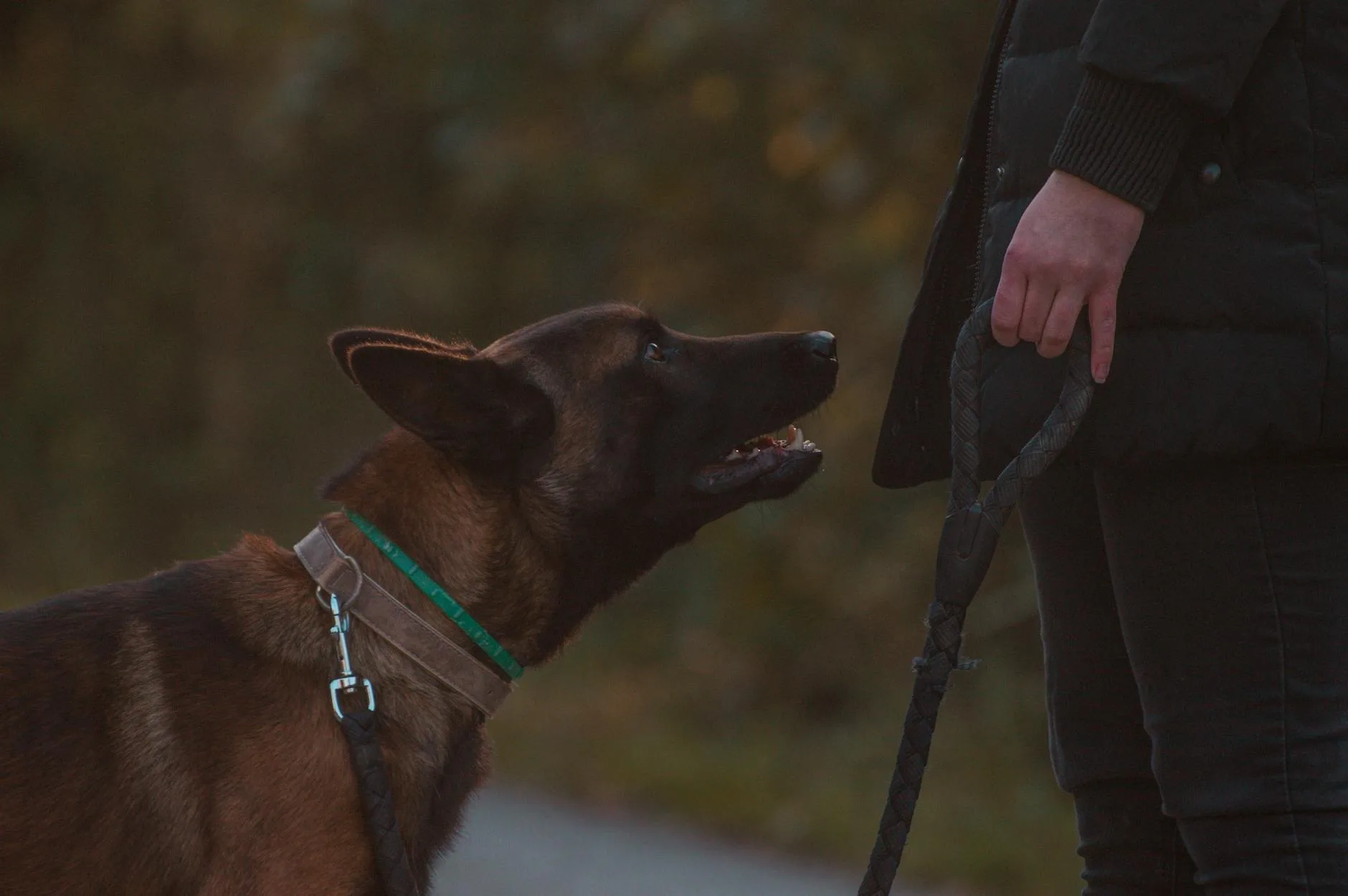
Instead of punishing unwanted behaviour, redirect to a wanted behaviour. Dog jumping on guests? Ask for a sit. Dog chewing shoes? Swap for a chew toy. The redirect gives you something to reward, turning a negative moment into a positive training opportunity.
Managing the Environment
Prevention is easier than correction. If the dog counter-surfs, don’t leave food on the counter. If the dog chases the cat, use baby gates to create safe zones. If the dog barks at the window, block the sightline. Management isn’t training, but it prevents the dog from practising (and self-rewarding) unwanted behaviour while you train the alternative. For anxious dogs, our calming aids comparison covers products that can help during the training process.
Ignoring Attention-Seeking Behaviour
If the behaviour is motivated by attention, removing attention removes the reward. Barking for attention? Turn your back, cross your arms, look away. The instant the barking stops, turn back and reward the quiet. This is called “extinction” and it works — but the behaviour often gets worse before it gets better (the “extinction burst”), so steel yourself for a noisy first few days.
What About Dangerous Behaviour
Positive reinforcement works for the vast majority of pet dog behaviour. For genuinely dangerous behaviours — aggression toward people or other dogs, resource guarding with biting, extreme fear reactivity — consult a qualified behaviourist, not a general trainer. The ABTC register lists certified Clinical Animal Behaviourists in the UK.
When to Get Professional Help
Signs You Need a Behaviourist
- Aggression (growling, snapping, biting) toward people or other dogs
- Extreme fear or anxiety that prevents normal life
- Resource guarding that escalates beyond growling
- Behaviour that’s getting worse despite consistent training
- Any situation where someone (human or animal) is at risk
Finding the Right Trainer
Look for trainers accredited by the ABTC, the Association of Pet Dog Trainers (APDT), or the Institute of Modern Dog Trainers (IMDT). These organisations require demonstrated competence and adherence to ethical, evidence-based methods. Avoid trainers who:
- Guarantee results (no honest trainer can guarantee behaviour change)
- Use equipment designed to cause pain or fear (prong collars, shock collars, rattle cans)
- Talk about dominance, alpha status, or pack leadership
- Won’t let you observe a class before joining
Costs
Group classes typically run £60-100 for a 6-week course. One-to-one sessions with a qualified trainer cost £40-80 per hour. Clinical Animal Behaviourist consultations are more expensive (£150-300 for an initial assessment) but are appropriate for complex behavioural issues. Most pet insurance policies cover behaviourist referrals if made through your vet. Our pet insurance guide explains what’s typically covered.
Frequently Asked Questions
How long does it take to train a dog with positive reinforcement? Basic commands (sit, stay, come) can be learned in 1-2 weeks of consistent short sessions. Reliable performance in all environments takes 2-3 months. Complex behaviours or behaviour modification can take 6-12 months. Every dog learns at a different pace — breed, age, individual temperament, and consistency of training all affect speed.
Does positive reinforcement work for aggressive dogs? Yes, but aggression requires professional guidance. A qualified Clinical Animal Behaviourist can design a behaviour modification programme using desensitisation and counter-conditioning (both positive reinforcement-based techniques). Attempting to address aggression without professional help risks making it worse. Never punish an aggressive dog — punishment increases fear, which increases aggression.
Won’t my dog only obey when I have treats? Not if you fade treats properly. Start by rewarding every correct response, then gradually make rewards unpredictable. Once a behaviour is reliable, reward every third or fourth time, then randomly. The unpredictability actually strengthens the behaviour. Many dogs transition to working primarily for praise and play once the behaviour is established.
At what age should I start training? Immediately. Puppies can start learning from the day they arrive home (typically 8 weeks). Early socialisation and positive training during the 8-16 week critical period has lifelong benefits. Adult and senior dogs can also learn new behaviours — the process is the same, though established habits may take longer to change.
Is positive reinforcement the same as clicker training? Clicker training is one form of positive reinforcement that uses a clicker as a precise marker signal. All clicker training is positive reinforcement, but not all positive reinforcement uses a clicker. A verbal marker like “yes!” works on the same principle. The clicker’s advantage is consistency and precision, which matters most for complex behaviours.