If your dog pulls on the lead, the fix is not a stronger arm or a harsher collar. You need to make a loose lead pay better than dragging you to the next smell, dog or lamppost. The training is simple, but it only works if every walk stops rewarding the pulling.
In This Article
- Why Dogs Pull on the Lead
- The Lead Setup That Makes Training Easier
- Teach Loose-Lead Walking Before the Real Walk
- What to Do the Moment the Lead Goes Tight
- How to Handle Sniffing, Dogs and Exciting Pavements
- Common Lead-Pulling Mistakes That Slow Progress
- A Simple Weekly Plan to Stop Pulling
- Frequently Asked Questions
Why Dogs Pull on the Lead
Most dogs pull because it works. They lean into the lead, you move forward, and they reach the smell, gate, car boot, park entrance or other dog faster. From the dog’s point of view, pulling has been paid for hundreds of times.
That is why “how to stop a dog pulling on the lead” is less about force and more about changing the deal. A tight lead must stop progress. A loose lead must open the world back up.
Pulling Is Usually Excitement, Not Stubbornness
Dogs move faster than people, and they investigate the world through their nose. A dog that trots ahead is not plotting against you. They are often excited, undertrained, over-aroused, or physically mismatched with the pace you want.
That distinction matters because punishment tends to make the walk more tense. If your dog already finds pavements, traffic or other dogs exciting, yanking the lead can add frustration. Calm repetition works better.
The RSPCA’s lead-walking advice uses the same basic principle: if the dog pulls towards something they want, stop and make loose-lead walking the thing that gets them there.
Equipment Helps, But It Does Not Train the Dog
A good harness can make pulling safer and easier to manage. It does not teach the dog that pulling no longer works. The training happens in the repeated moments where you stop, reset, reward, and move again.
This is also why switching from a collar to a no-pull harness can look like a miracle for two walks, then fade. The new equipment changes the feel; the old habit returns unless the rules of the walk change too.
The Lead Setup That Makes Training Easier
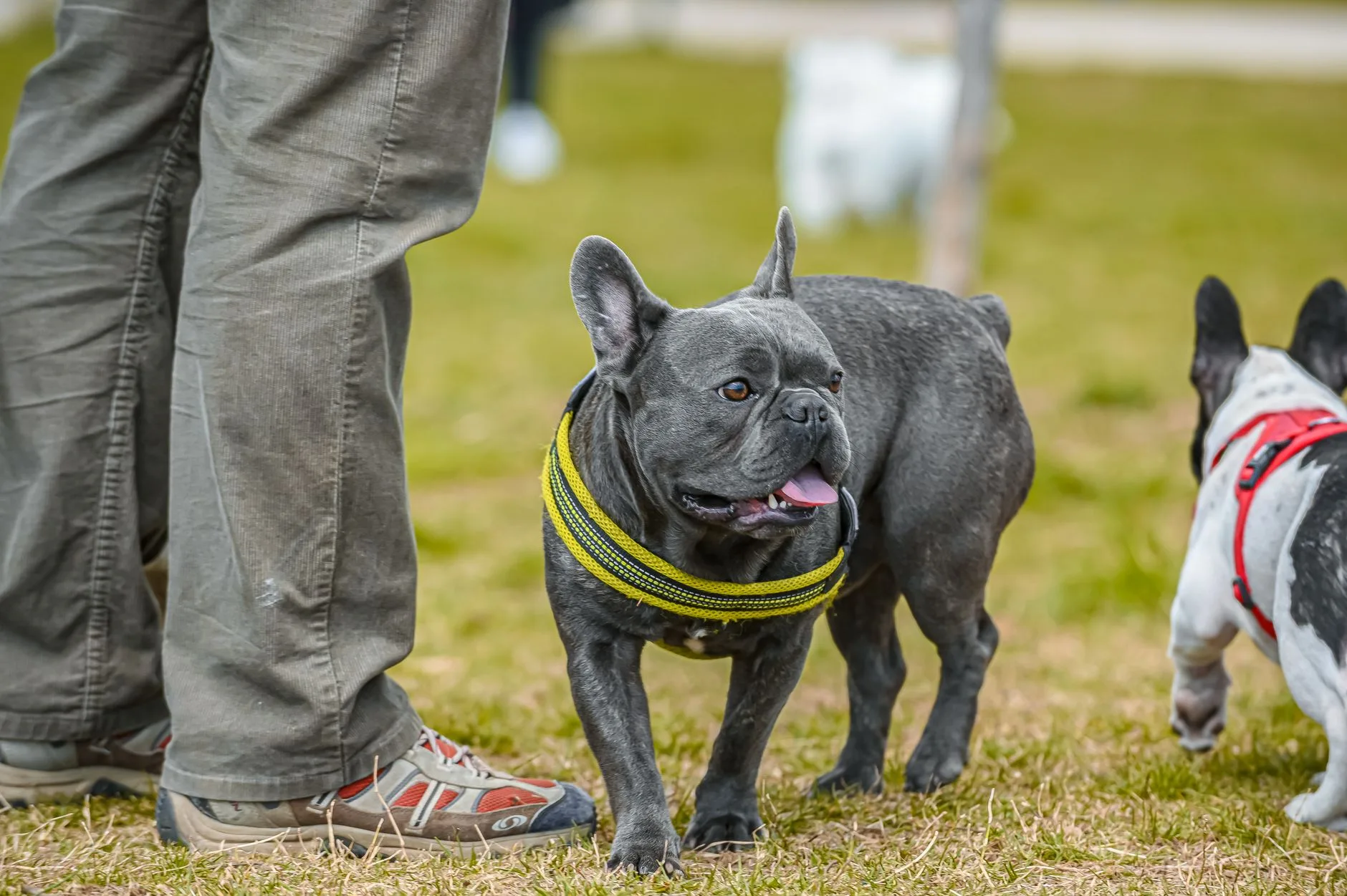
You do not need a drawer full of gadgets. For most UK dogs, a safe training setup costs about £35-£75 if you are starting from scratch, less if you already own a decent harness and lead.
Use a Secure Harness for Most Pullers
For a dog that pulls hard, I would use a Y-front harness rather than walking from a neck collar. Look for a harness that leaves the shoulders free, has enough adjustment around the chest, and does not sit tight under the armpits.
Useful UK options include:
- Budget: Ancol or Pets at Home padded harnesses, usually about £12-£25, fine for lighter dogs and early training.
- Mid-range: Ruffwear Front Range, usually about £40-£55 from Amazon UK, Cotswold Outdoor or specialist pet retailers.
- More control: PerfectFit or TTouch-style modular harnesses, often about £45-£70, useful for awkward body shapes.
Front-clip harnesses can reduce pulling leverage, but they need careful fitting. If the front strap pulls across the shoulder, it can change the dog’s gait. For everyday loose-lead training, I prefer a well-fitted Y-front harness with a normal back clip, then a front clip only for short management moments where needed.
Choose the Right Lead Length
A 1.2m lead is often too short for training because the dog hits the end before either of you has time to adjust. A 2m training lead gives more space while keeping control. Expect to pay £10-£25 for a decent nylon or biothane lead.
Avoid extending leads while teaching loose-lead walking. They reward constant tension, because the dog feels pressure and still gets more distance. Keep the flexi lead for open spaces later if you like them, but it is the wrong tool for this job.
Do not wrap the lead around your hand. Hold the handle properly, use a second hand as a guide if needed, and keep your wrist neutral. A sudden lunge from a medium dog can hurt more than people expect.
Treats Need to Be Worth Turning Around For
Loose-lead walking is hard at first, so dry biscuits rarely cut it. Use tiny pieces of cooked chicken, JR Pet Products pate, Fish4Dogs training treats, or Lily’s Kitchen rewards. A bag usually costs £3-£8, and you only need pea-sized pieces.
A clip-on treat pouch, about £8-£18 from Amazon UK, Pets at Home or Decathlon’s dog-walking range, makes a real difference. If rewards are buried in a coat pocket, your timing will be late.
Teach Loose-Lead Walking Before the Real Walk
The biggest mistake is trying to fix pulling halfway to the park, when the dog is already fizzing. Start where your dog can win: hallway, garden, driveway, quiet pavement outside the house.
Pick Your Walking Zone
Decide where you want your dog to walk. It does not have to be a formal heel. For normal walks, I like a “bubble” beside or slightly ahead of your leg, with a soft J-shape in the lead.
Choose one side for the first week. Swapping sides constantly makes it harder for the dog to understand the picture.
Build the First Five Steps
Start with your dog beside you, lead loose, treat hand near your thigh. Say your walking cue once, such as “with me” or “let’s go”, then take one step. If your dog moves with you and the lead stays loose, mark it with “yes” and reward beside your leg.
Then do two steps. Then three. Stop before it falls apart.
The first sessions should feel almost too easy:
- Stand still with the dog beside you and reward calm attention.
- Take one step and reward beside your leg.
- Take three steps and reward while the lead is still loose.
- Change direction before the dog reaches the end of the lead.
- End after two or three good minutes, not after twenty messy ones.
If your dog cannot manage three steps in the garden, the street is too hard today. That is not failure. It is useful information.
Reward Position, Not Just Eye Contact
You do not need your dog staring at you for the whole walk. That is tiring and unnatural. Reward the position you want: shoulder near your leg, loose lead, relaxed pace, checking in occasionally.
Feed the treat where you want the dog to be. If you reward in front of your knee, you may accidentally teach them to forge ahead. If you reward behind your leg, some dogs start lagging. Beside your trouser seam is a good target.
The Battersea lead-walking advice also starts with a calm setup beside you, then rewards the dog for staying close before gradually adding more movement.
What to Do the Moment the Lead Goes Tight
This is where the habit changes. The instant the lead goes tight, forward motion stops. Not with a jerk, lecture, or angry “heel”. Just stop.
The Stop-and-Reset Method
When the lead tightens, plant your feet and wait. Keep your arm quiet. The second your dog turns back, steps towards you, or loosens the lead, mark it and invite them back to your side. Reward, then move forward again.
The timing matters. If you take three more steps while deciding what to do, the dog has already been paid for pulling. You are not aiming for perfection; you are aiming for consistency.
For a strong puller, use this pattern:
- Lead tightens.
- You stop moving.
- Dog checks back or slackens the lead.
- You mark the choice with “yes”.
- Dog returns beside you.
- You reward and walk on.
It will feel slow for the first few walks. That is normal. You are rewriting a habit that may have been rehearsed for months.
When Stopping Is Not Enough
Some dogs hit the end of the lead and stand there scanning the horizon. If that happens, do not get into a silent tug-of-war. Cheerfully turn 180 degrees and walk the other way for a few steps.
This is not a punishment turn. It is a reset. You are making the path interesting again and giving the dog a new chance to choose a loose lead.
I use direction changes when a dog is too locked on to think. Stop-and-wait is good for mild pulling. Turn-and-reset is better when the dog is committed to dragging.
Keep the Reward Rate High at First
At the start, reward every few steps. That can feel excessive, but it is how you compete with the outside world. After a week or two, reduce the food and start rewarding with life rewards: sniffing a verge, greeting a calm person, crossing to the park, or moving towards an interesting tree.
The trick is that the reward still comes through a loose lead. Pulling pauses access. Walking nicely opens access.
How to Handle Sniffing, Dogs and Exciting Pavements
Most lead-pulling failures happen near distractions. The dog can walk nicely down your road, then turn into a sled dog at the park gate. Plan for that rather than blaming the dog.
Use Sniffing as a Reward
Sniffing is not the enemy. For many dogs, it is the whole point of the walk. If you ban all sniffing, you make pulling more likely because your dog has to fight for access.
Instead, put sniffing on cue. Walk a few loose-lead steps, then say “go sniff” and let your dog investigate a patch of grass for 20-30 seconds. Call them back, reward, and continue.
This gives the dog a fair bargain: walk with me, then you get the smell.
Create Distance From Other Dogs
If your dog pulls towards other dogs, do not practise this skill at two metres away. Cross the road, turn into a driveway, or use parked cars as a visual break. Reward the moment your dog notices the other dog without launching forward.
This overlaps with reactivity, but it is not the same thing. If your dog barks, lunges, growls, freezes, or cannot take food around other dogs, read PawPicks’ guide to lead aggression in reactive dogs before treating it as normal pulling.
Separate Training Walks From Exercise Walks
For the first fortnight, make some walks boring and short on purpose. Five minutes of high-quality loose-lead practice beats 45 minutes of dragging to the park.
Your dog still needs exercise. Use the garden, scent games, safe off-lead areas, a hired secure field, or a long line where appropriate. PawPicks’ guide to long lines for recall training is useful if your dog needs more space without being fully off lead.
Expect a decent 5m-10m long line to cost £12-£30. Use it with a harness, not clipped to a collar.
Common Lead-Pulling Mistakes That Slow Progress
Most people fail because they are inconsistent, not because the dog is impossible. I have made nearly all of these mistakes with excited dogs, and they are easy to miss in the moment.
Letting Pulling Work “Just This Once”
If your dog pulls you to the park gate every morning, the behaviour is being trained daily. You can still have a normal life, but choose the moments that matter. Doorways, road crossings, greetings and park gates should all require a loose lead.
If you are late for school drop-off or work, do a management walk rather than a training walk. Use a secure harness, avoid the worst triggers, and do not pretend you are teaching. Mixing rushed walks with training rules confuses everyone.
Pulling Back on the Lead
Pulling back often makes the dog pull harder. It also creates a tense lead as the default feeling. Instead, stop, turn, or move sideways to break the line.
If you need extra control, check whether your harness fit is right. PawPicks’ guide to measuring your dog for a harness explains the chest and neck measurements that stop rubbing and escape attempts.
Using Low-Value Rewards Outdoors
The pavement is full of smells, dogs, people, crisp packets and school-run chaos. A dry kibble reward may not compete. Use better treats outdoors and save boring food for easy indoor practice.
That does not mean feeding half a roast chicken every walk. Cut rewards tiny, use part of the dog’s normal food allowance if needed, and mix food with sniffing rewards as soon as the behaviour improves.
For dogs that gain weight easily, PawPicks’ guide on how to tell if your dog is overweight is worth reading before you start daily treat-heavy training.
Expecting a Harness to Fix Training
A no-pull harness can make the first week safer, especially with a large adolescent dog. It is not the finish line. If the dog still leans into it, you still need to teach the loose-lead rule.
For some dogs, a front clip plus back clip with a double-ended lead gives better short-term control. A good double-ended training lead costs about £12-£25. Use it calmly; do not steer the dog like a shopping trolley.
A Simple Weekly Plan to Stop Pulling
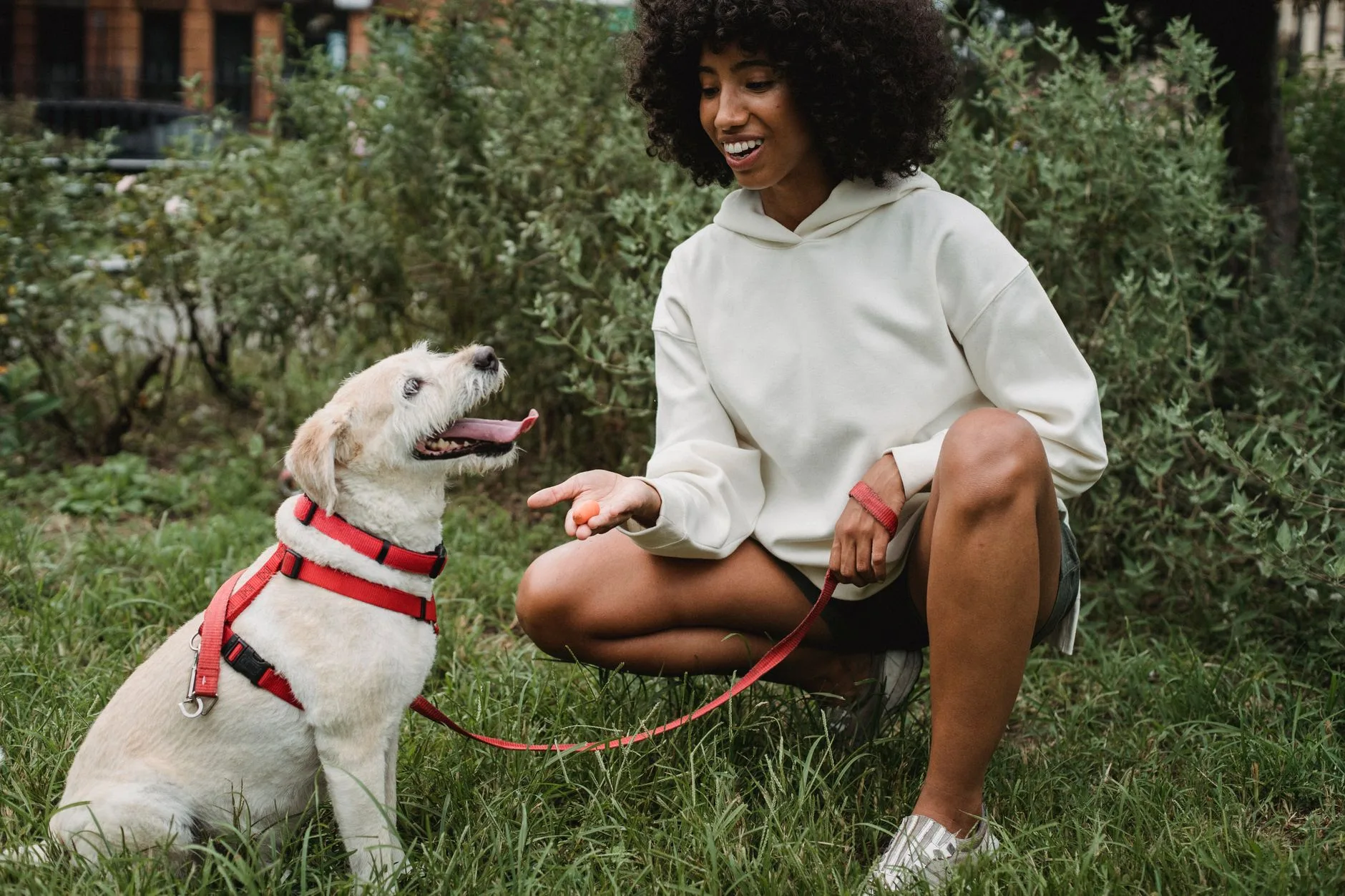
For a young dog with mild pulling, you may see improvement within a week. For a strong adolescent dog that has pulled for a year, expect several weeks of daily practice before walks feel easy.
A Realistic Timeline
In the first three days, you are mostly teaching the dog that the rules have changed. Walks may be shorter and more stop-start.
By week two, you should see more check-ins, faster resets, and longer stretches of loose lead in easy areas. Busy pavements will still be patchy.
By weeks four to six, many dogs can manage normal neighbourhood walks if the owner has been consistent. High-distraction places, such as school gates, busy parks and outdoor cafe streets, may take longer.
If there is no progress at all after two weeks of consistent practice, check three things: your rewards are good enough, your environment is easy enough, and pulling is not still being rewarded on other walks.
When Pulling Needs Professional Help
Get qualified help if your dog is powerful enough to injure someone, if they lunge at dogs or traffic, or if walks feel unsafe. Look for a force-free trainer or behaviourist with recognised UK credentials, such as APDT, ABTC or IMDT membership.
Private one-to-one sessions often cost £50-£90 per hour in the UK. Group loose-lead classes are usually cheaper, roughly £80-£150 for a block, but they are not ideal for dogs that react badly around other dogs.
If your dog is anxious or aggressive on lead, the priority is emotional safety, not a neat heel position.
This plan keeps the training small enough to follow. Do not try to fix every walk in one go.
Days 1-2: House, Garden and Driveway
Do three sessions per day, two to five minutes each. Practise one-step, three-step and direction-change rewards. Use the harness and lead you plan to use outdoors.
Your goal is not a long walk. Your goal is a dog that understands: loose lead near your leg makes rewards happen.
Days 3-4: Quiet Pavement
Pick the dullest route you can. Walk for five to ten minutes. Stop every time the lead tightens, reward check-ins, and turn away from distractions before your dog explodes forward.
Keep your expectations modest. If you get one calm side of the street, call it a win.
Days 5-7: Add Controlled Distractions
Practise near a grass verge, quiet park edge, or low-level dog-walking area. Do not head straight into the busiest path. Use sniffing as the reward after short stretches of loose-lead walking.
Track progress by counting good moments, not by demanding a perfect walk. Did your dog check back sooner? Did the lead go loose faster after stopping? Did you reach the park gate without being dragged? Those are the wins that stack up.
For dogs that also need better recall, pair this work with PawPicks’ guide on teaching a dog to walk off lead safely. Lead manners and recall support each other because both teach the dog that staying connected to you pays.
The bottom line: stop making pulling useful, make loose-lead walking rewarding, and keep the early sessions much easier than your ego wants them to be. That is how to stop a dog pulling on the lead without turning every walk into a wrestling match.
Frequently Asked Questions
What is the fastest way to stop a dog pulling on the lead? The fastest humane method is to stop every time the lead tightens, reward the dog when they return to a loose lead, and practise first in low-distraction areas. It is slower for the first few walks but faster than months of inconsistent corrections.
Should I use a harness or collar for a dog that pulls? For most strong pullers, a well-fitted Y-front harness is safer than attaching the lead to a neck collar. A collar can still carry ID, but the walking lead is usually better clipped to a harness while you train.
Do no-pull harnesses actually work? They can help with short-term control, especially front-clip designs, but they do not replace training. If pulling still gets the dog where they want to go, the habit will continue.
Why does my dog walk nicely on the way home but pull going out? The outward walk usually has more excitement and anticipation. Practise short, calm sessions before heading to the park, and reward loose-lead walking before the dog reaches their favourite places.
How many treats should I use for loose-lead training? Use a lot at first, but keep them tiny. Ten to twenty pea-sized rewards in a short session is normal. As the behaviour improves, replace some food rewards with sniffing, praise and access to places your dog enjoys.
Is pulling on the lead a sign of dominance? No. It is usually a learned behaviour, excitement, frustration, or lack of training around distractions. Treating it as dominance often leads to harsher handling and worse walks.