The breeder hands you a warm, wriggling bundle that immediately wees on your jumper. You get home, set the puppy down, and it sprints behind the sofa. You look at your partner. Your partner looks at you. Neither of you has the faintest idea what to do next. Good news: the first eight weeks at home are chaotic for everyone, and the things you do (or don’t do) during this period set the tone for the next 12-15 years. This isn’t about perfection — it’s about getting the foundations right while everything smells faintly of puppy pads.
In This Article
- Before Your Puppy Arrives
- The First 24 Hours
- Toilet Training: The Non-Negotiable
- Bite Inhibition: Teaching a Soft Mouth
- Socialisation: The Critical Window
- Crate Training Done Right
- Basic Commands to Teach First
- Feeding Schedule and Routine
- Common Mistakes New Puppy Owners Make
- When to Worry and When to Relax
- Frequently Asked Questions
Before Your Puppy Arrives
Preparation makes the first few days much easier. Most of the stress people feel with a new puppy comes from not having things ready.
Puppy-Proofing Your Home
Get on your hands and knees and look at every room from puppy height. Anything chewable, swallowable, or toxic needs to move.
- Cables — tuck behind furniture or buy cable covers. Puppies chew cables with terrifying enthusiasm
- Shoes, socks, children’s toys — off the floor. If it smells interesting, it will be eaten
- Cleaning products — behind closed doors. Same for medications, chocolate, grapes, raisins, and xylitol (found in sugar-free gum)
- Houseplants — several common ones are toxic to dogs. Lilies, poinsettias, and aloe vera need to be out of reach. The PDSA’s toxic plants list has the full breakdown
- Bins — get ones with lids. A puppy will pull a bin apart like it owes them money
Kit You’ll Need
- Crate — sized so the puppy can stand, turn around, and lie down comfortably. Buy the adult size with a divider panel
- Puppy pads — for the first couple of weeks. You’ll use more than you expect
- Food and water bowls — stainless steel is easiest to clean. Slow-feeder bowls are worth it for breeds that inhale food
- Collar, lead, and ID tag — the law requires a tag with your name and address (not optional)
- Enzymatic cleaner — not regular floor cleaner. Enzymatic cleaners break down urine at a molecular level so the puppy can’t smell it and go back to the same spot
- Puppy food — whatever the breeder was using, start with the same brand. Switch gradually over 7-10 days if you want to change
The First 24 Hours
Everything is new and a bit frightening. Your job on day one is simple: let the puppy explore at their own pace and start building trust.
The Car Ride Home
Have someone sit in the back with the puppy, ideally on a towel that smells of the litter. If the puppy cries, that’s normal — gentle reassurance, not a festival of noise. If they’re sick, that’s also normal. Towels. Many towels.
Arriving Home
Let the puppy into one room first — usually the kitchen or living room. Too many rooms at once is overwhelming. Let them sniff everything. When they squat, whisk them outside immediately (this is toilet training from minute one — more on that below).
The First Night
This is where it gets emotional. The puppy has just left its mother and littermates. It will cry. Every new puppy owner spends the first night lying on the floor next to the crate wondering if they’ve made a terrible mistake.
The approach that worked for us — and most trainers now recommend — is having the crate in your bedroom for the first few nights. The puppy can hear you breathe, smell you nearby, and settles faster. After 3-5 nights, start moving the crate gradually toward its permanent spot.
Toilet Training: The Non-Negotiable
This is the big one. Get this right early and you’ll save yourself months of frustration. For the full deep dive, we’ve got a complete house training guide, but here’s the condensed version.
The Core Principle
Puppies need to go outside:
- First thing every morning
- After every meal
- After every nap
- After every play session
- Last thing before bed
- Every 1-2 hours in between (for an 8-week-old)
That sounds like a lot because it is. Set phone alarms if you need to. The goal is to take them out so often that they never get the chance to go inside.
When They Get It Right
Huge praise. Treats. Party. Make going outside the best thing that’s ever happened to them. Don’t wait until you’re back inside — reward the moment they finish, right there in the garden.
When Accidents Happen
And they will — daily, for weeks. Clean it up with enzymatic cleaner and move on. No shouting, no nose-rubbing, no punishment. The puppy doesn’t understand what they did wrong — they just learn that weeing makes you angry, which makes them hide to do it (behind the sofa, under the bed). That’s worse, not better.
The Timeline
Most puppies are reliably toilet trained by 4-6 months. Some take longer. Giant breeds tend to take longer than small breeds. If you’re still having daily accidents at 6 months, speak to your vet to rule out anything medical.
Bite Inhibition: Teaching a Soft Mouth
Puppy teeth are needles. Your hands will look like you’ve been arm-wrestling a rosebush. This is completely normal — puppies explore the world with their mouths, and they have no idea how much those teeth hurt.
How to Teach It
The technique is simple and effective:
- When the puppy bites too hard, let out a sharp yelp (mimic how a littermate would react)
- Immediately stop playing and turn away for 10-15 seconds
- Resume play
- Repeat consistently — every time, every person in the household
The puppy learns: bite too hard → fun stops. Over 2-4 weeks, the pressure decreases noticeably. By about 16 weeks, most puppies have learned to mouth gently rather than clamp down. For a related angle, see our Best Puppy Food 2026 UK: From Weaning to 12 Months guide.
What Doesn’t Work
- Holding the mouth shut — creates fear and hand-shyness
- Tapping the nose — same problem
- Shouting “no” — too vague. The puppy doesn’t know what “no” means yet
- Spraying water — damages trust and doesn’t teach anything useful
Redirect, Redirect, Redirect
Always have a chew toy within reach. When the puppy goes for your hand, swap in the toy. Frozen Kongs are brilliant for this — stuff with peanut butter (xylitol-free), freeze overnight, and they’ll chew that for 30 minutes instead of your fingers.
Socialisation: The Critical Window
Between about 3 and 14 weeks, puppies are in a developmental window where new experiences form lasting impressions. Anything they encounter during this period becomes “normal” to them. Anything they don’t encounter can become frightening later.
What to Expose Them To
The goal is calm, positive exposure — not flooding. Introduce things gradually:
- People — men, women, children, people in hats, people with beards, people using walking sticks, delivery drivers
- Sounds — traffic, doorbells, washing machines, hoovers, fireworks (at low volume from a speaker initially)
- Surfaces — grass, gravel, carpet, tile, metal (vet table), grates
- Other dogs — only vaccinated, calm dogs until your puppy’s jabs are complete. Ask friends with gentle older dogs
- Handling — ears, paws, mouth, tail. This makes vet visits and grooming infinitely easier later
- Environments — carry them (before vaccinations allow ground walks) through town centres, near train stations, past school gates at pickup time
The Vaccination Timing Problem
Your vet will likely say no walks until two weeks after the second vaccination (usually around 12 weeks). That overlaps with the end of the socialisation window. The solution: carry the puppy in your arms or use a pet carrier. They can see, hear, and smell everything without touching the ground.
For reinforcement techniques during socialisation, our positive reinforcement training guide has detailed methods.
Crate Training Done Right
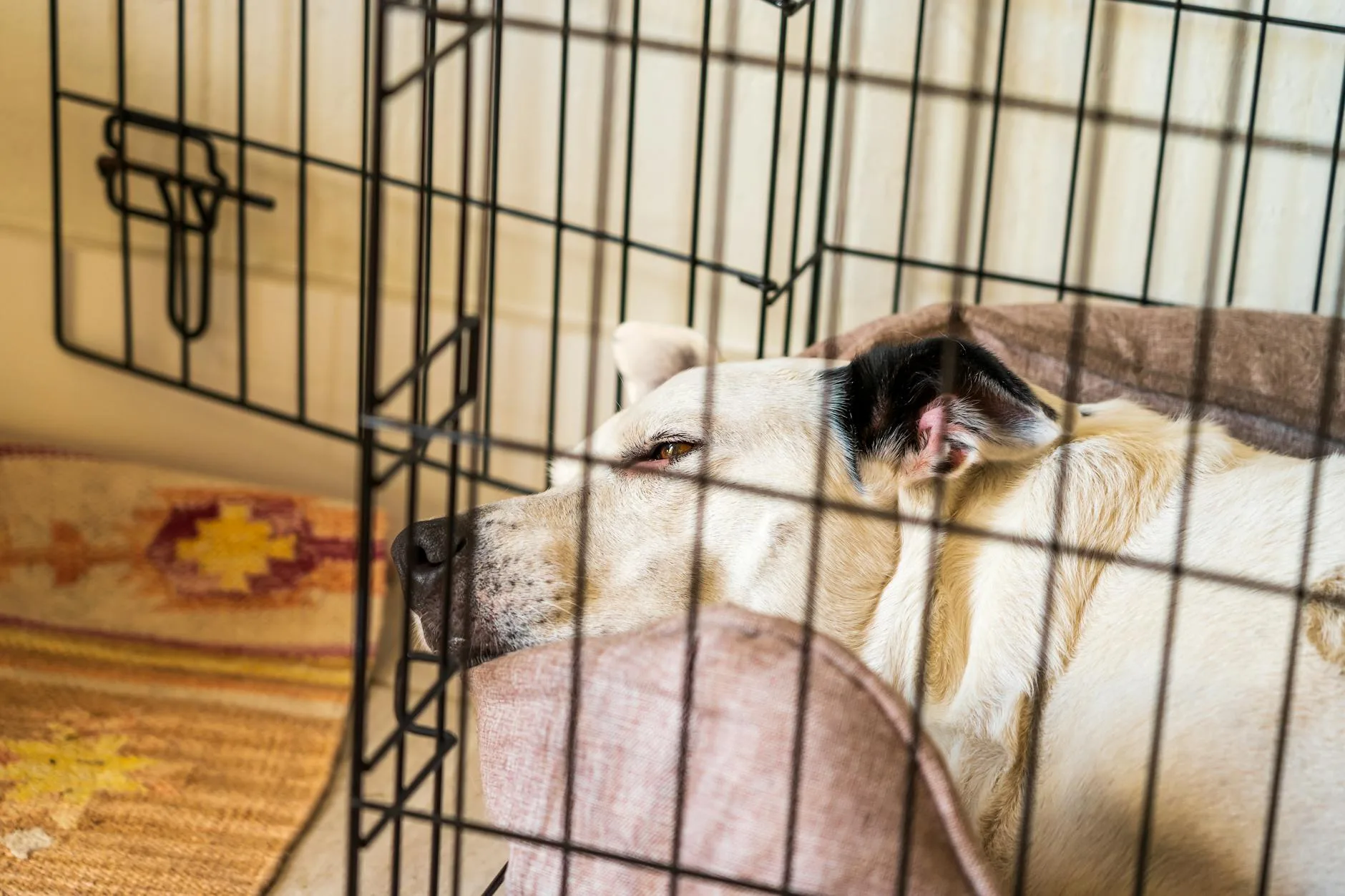
A crate isn’t a cage — it’s a den. Done properly, your puppy will choose to go in there to sleep, relax, and feel safe. Done badly, it becomes a source of anxiety.
The Setup
- Place the crate in a room where the family spends time (not isolated in a utility room)
- Put a soft bed or blanket inside, plus a toy
- Leave the door open for the first few days. Let the puppy explore it freely
- Feed meals inside the crate with the door open
Building Up Duration
- Toss treats inside — praise when the puppy enters
- Start closing the door for 10-20 seconds while you sit right next to it
- Gradually increase the time — 1 minute, 5 minutes, 15 minutes, 30 minutes
- Add short absences — leave the room for 30 seconds, return calmly
- Build to the point where the puppy can settle in the crate for 1-2 hours during the day
Hard Rules
- Never use the crate as punishment. If the puppy did something wrong and you put them in the crate, they’ll associate the crate with being in trouble
- Never leave a puppy in a crate for more than 2-3 hours during the day (overnight is different — they’ll sleep through most of it)
- Never force them in. If they resist, you’ve moved too fast. Go back a step
After eight weeks of consistent crate training, most puppies go to their crate voluntarily when they’re tired. Ours started taking herself to her crate after dinner by week three — no prompting needed.
Basic Commands to Teach First
You don’t need to turn your puppy into Crufts material in two months. Focus on these four commands — they cover 90% of daily life.
Sit
The easiest and most useful command. Hold a treat above the puppy’s nose, move it slowly backward over their head. Their bum goes down naturally. The instant it does, say “sit,” give the treat, praise. Repeat 5-10 times per session, 2-3 sessions per day.
Come (Recall)
The most important command for safety. Start indoors with minimal distractions:
- Say the puppy’s name plus “come” in a cheerful voice
- When they come to you, massive reward — treats, praise, fuss
- Practice at random moments, not just during formal training
- Never call them to you for something they don’t like (bath, nail clipping). Go and get them instead — otherwise you poison the recall cue
Leave It
Essential for walks and general safety. Hold a treat in your closed fist. The puppy will paw, lick, and nose at your hand. Wait. The moment they pull away or look at you, say “leave it” and give a different (better) treat from your other hand. This teaches them that ignoring something gets them something better.
Settle
Not a flashy command, but one of the most useful. When the puppy is naturally lying down and calm, say “settle” and reward them gently. Over time, they learn that “settle” means “relax where you are.” This is the foundation for calm behaviour in pubs, cafés, and when visitors come over. Our How to Brush Your Dog’s Teeth at Home guide is useful alongside this.
Feeding Schedule and Routine
How Often
- 8-12 weeks: 4 meals per day
- 3-6 months: 3 meals per day
- 6+ months: 2 meals per day (most dogs stay on this for life)
Portion Size
Follow the food manufacturer’s guidelines as a starting point, then adjust based on your puppy’s body condition. You should be able to feel (but not see) their ribs. If they’re leaving food in the bowl, reduce slightly. If they’re hoovering it up and looking for more, check with your vet before increasing.
What to Feed
Stick with whatever the breeder was using for the first week at least. If you want to switch, do it gradually — 75% old food / 25% new for 2-3 days, then 50/50, then 25/75, then fully switched. Sudden changes cause stomach upsets, and you’ll be cleaning up the consequences at 3am.
For guidance on choosing quality dog food, including what to look for on the label, we’ve got a separate guide.
Treats
Use treats for training, but factor them into the daily calorie intake. A puppy that gets 20 training treats a day on top of full meals will get pudgy fast. Break treats into tiny pieces — the puppy doesn’t care about size, just frequency.
Common Mistakes New Puppy Owners Make
After talking to other owners at puppy classes and watching the same patterns repeat, these come up constantly:
Too Much Freedom Too Soon
Giving a puppy free rein of the house at 9 weeks is a recipe for chewed furniture, toilet accidents in every room, and stolen socks. Use baby gates to restrict access to one or two rooms. Expand gradually as they earn trust.
Inconsistent Rules
If mum says no jumping on the sofa but dad secretly lets them up every evening, the puppy isn’t being naughty when it jumps on the sofa — it’s doing exactly what it’s been taught (that sometimes jumping works). Everyone in the household needs to be on the same page. Every rule, every time.
Skipping Puppy Classes
Group puppy classes (usually £50-80 for a 6-week course) are worth every penny. They’re not just for the puppy — they teach you. Look for classes that use positive reinforcement methods. The Kennel Club’s Good Citizen scheme is a good starting point for finding accredited trainers near you.
Overexercising
The general rule is 5 minutes of formal exercise per month of age, twice a day. So a 10-week-old gets about 12-13 minutes per walk. Puppy joints are still developing, and too much exercise too early can cause lasting damage, especially in large breeds. Free play in the garden doesn’t count — that’s self-regulated and fine.
When to Worry and When to Relax
Normal Puppy Things (Don’t Panic)
- Biting everything — normal until about 5-6 months. Teach bite inhibition but don’t expect miracles at 10 weeks
- Crying at night — normal for the first 1-2 weeks. It gets better
- Eating their own poo — disgusting but common. Most grow out of it. Pick up immediately so they can’t
- Hiccups — puppies get hiccups a lot. Completely harmless
- Zoomies — sudden bursts of manic energy, usually in the evening. Let them tire themselves out
See a Vet If
- Not eating for more than 24 hours — puppies can’t fast like adult dogs
- Persistent diarrhoea or vomiting — dehydration in puppies escalates fast
- Lethargy — a puppy that doesn’t want to play is telling you something
- Limping — could be a growth issue, especially in large breeds
- Swollen belly — could indicate worms (common in puppies despite breeder treatments)
Don’t feel embarrassed calling the vet for what seems minor. Vets would rather see a healthy puppy than treat a sick one that was left too long. Most practices offer free puppy health checks — use them.
Frequently Asked Questions
How long can a puppy be left alone? An 8-week-old puppy should not be left alone for more than 1-2 hours. By 3-4 months, you can build up to 3-4 hours if crate trained. No puppy under 6 months should be left for a full working day. If you work full-time, arrange a dog walker, daycare, or family member to break up the day.
When can a puppy go outside for walks? Usually 1-2 weeks after their second vaccination, typically around 12-14 weeks old. Before that, carry them in public to continue socialisation. Your vet will give you the exact timeline based on your puppy’s vaccination schedule and local disease risk.
Should I let my puppy sleep in my bed? That’s a personal choice, not a training issue. If you don’t want a 30kg dog in your bed in two years, don’t start the habit now. If you’re happy to share, there’s no behavioural reason not to. The important thing is consistency — either always or never, not sometimes.
How much sleep does a puppy need? Puppies need 18-20 hours of sleep per day. That sounds extreme but it’s normal — they grow rapidly and sleep is when most of that development happens. If your puppy seems hyperactive, they might actually be overtired. Enforced naps in the crate help enormously.
When should I start training my puppy? Immediately. The day you bring them home is day one of training. It doesn’t need to be formal — just rewarding good behaviour, teaching their name, and starting toilet training. Formal commands like sit and come can begin at 8 weeks. Keep sessions short (5 minutes) and positive.