It’s 6am, you’ve stepped in something wet for the third time this week, and your new puppy is looking at you with that face — the one that says “what? I needed to go.” Every new puppy owner goes through this. The good news? Most puppies can be reliably house trained within a few weeks if you follow a consistent routine. The bad news? There are no shortcuts, and you will lose at least one pair of socks along the way.
This house train puppy guide covers everything from your first day home to the point where accidents become a distant (if slightly traumatic) memory. Whether you’ve got a tiny Chihuahua or a Great Dane puppy the size of a small horse, the fundamentals are the same.
Why Puppies Have Accidents (It’s Not Spite)
Before getting into the how, it helps to understand the why. Puppies aren’t having accidents to wind you up — they physically can’t hold it for very long. A general rule: a puppy can hold their bladder for roughly one hour per month of age. So a 10-week-old puppy? About two and a half hours, maximum. And that’s being generous.
Their bladder muscles are still developing, and they haven’t yet made the connection between “needing to go” and “going outside.” That connection is exactly what you’re building. Think of house training less as teaching a rule and more as forming a habit — one that takes patience and a frankly unreasonable amount of trips to the garden.
Puppies also tend to need the toilet at predictable times:
- After waking up — first thing, every single time
- After eating or drinking — usually within 15-30 minutes
- After playing or excitement — zoomies are a trigger
- After being in a crate or confined space — as soon as they’re let out
Knowing these triggers gives you an enormous advantage. You’re not guessing — you’re anticipating.
Setting Up for Success Before Your Puppy Arrives
Preparation makes a real difference. If you’re still waiting for your puppy to come home, use this time wisely.
Choose a toilet spot. Pick one area of your garden and stick with it. Grass is ideal, but a paved area works too — whatever you pick, be consistent. Taking your puppy to the same spot every time helps them associate that location with going to the toilet. It also makes cleanup easier, which you’ll appreciate more than you think.
Stock up on the right supplies. You’ll need:
- Enzyme-based cleaner — something like Simple Solution or Bio One (about £8-12 from Pets at Home or Amazon UK). Standard household cleaners don’t break down the proteins in urine, so your puppy can still smell where they went and will return to the same spot
- Puppy pads — useful as a backup, not a long-term plan (more on this below)
- Treats — small, soft training treats that you can grab quickly. You need these in your pocket at all times. Check out our guide on how to choose treats that are actually healthy for picking ones that won’t pile on the puppy weight
- A lead — even for garden trips, a lead helps early on to guide your puppy to the right spot
Decide on your crate setup. A crate isn’t cruel — when introduced properly, most puppies treat it like a den. More on crate training for house training below, but get the crate set up and comfortable before your puppy arrives. Our guide to the best dog beds covers what to put inside it.
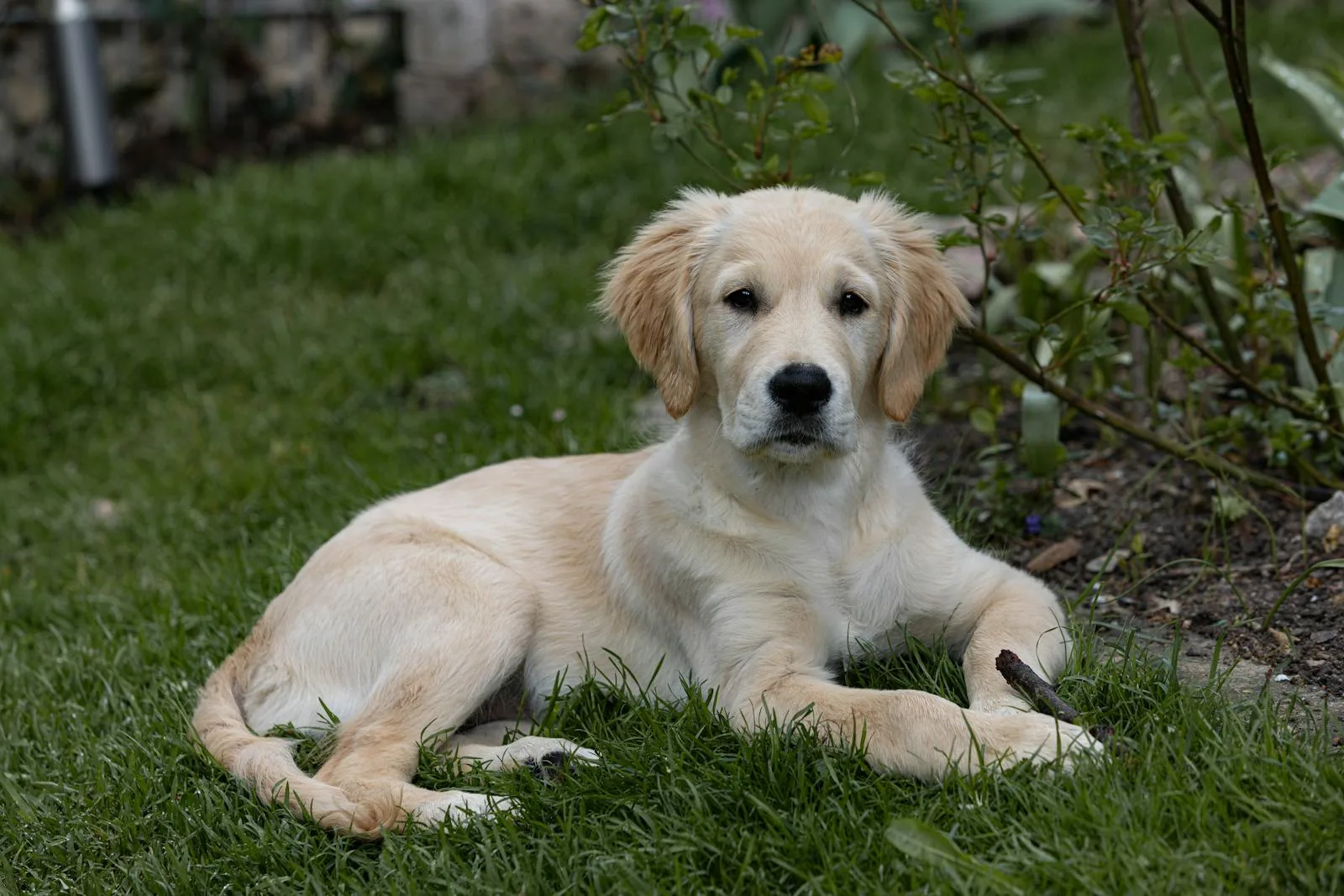
The Core Routine: How to House Train Your Puppy
House training boils down to one principle: make it easy to get it right, and boring to get it wrong. You want to set your puppy up so they’re almost always taken outside before they need to go, then rewarded heavily when they go in the right place.
Step 1: Take Them Out Constantly
In the first few weeks, you’ll feel like you live in the garden. That’s normal. Take your puppy outside:
- First thing in the morning (carry them if they’re small — they might wee on the way to the door)
- After every meal
- After every nap
- After playtime
- Every 30-60 minutes in between
- Last thing at night
Yes, this is a lot. But it’s temporary. As your puppy grows and their bladder develops, you’ll gradually extend the intervals.
Step 2: Use a Cue Word
Pick a phrase and stick with it. “Go toilet,” “busy busy,” “be quick” — whatever doesn’t make you cringe saying it in your garden at 11pm in January. Say it calmly while your puppy is actually going, not before. You’re labelling the behaviour so they eventually associate the phrase with the action.
Step 3: Reward Immediately
The second — and I mean the actual second — your puppy finishes going outside, praise them and give a treat. Not when you get back inside. Not after you’ve shut the door. Right there, in the garden, while they’re still in the squat. The timing matters enormously because puppies live in the moment. A reward five seconds late might as well be for something else entirely.
Step 4: Don’t Punish Accidents
This is the most important thing in this entire house train puppy guide. Never punish your puppy for an accident. No rubbing their nose in it, no shouting, no cross voices. They won’t understand what they’ve done wrong — they’ll just learn to be afraid of going to the toilet near you, which means they’ll start hiding behind the sofa to do it instead. Ask me how I know.
If you catch them mid-accident, calmly pick them up and take them outside. If you find an accident after the fact, just clean it up with your enzyme cleaner and move on. The moment has passed. For a related angle, see our How to Train a Puppy: The First 8 Weeks at Home guide.
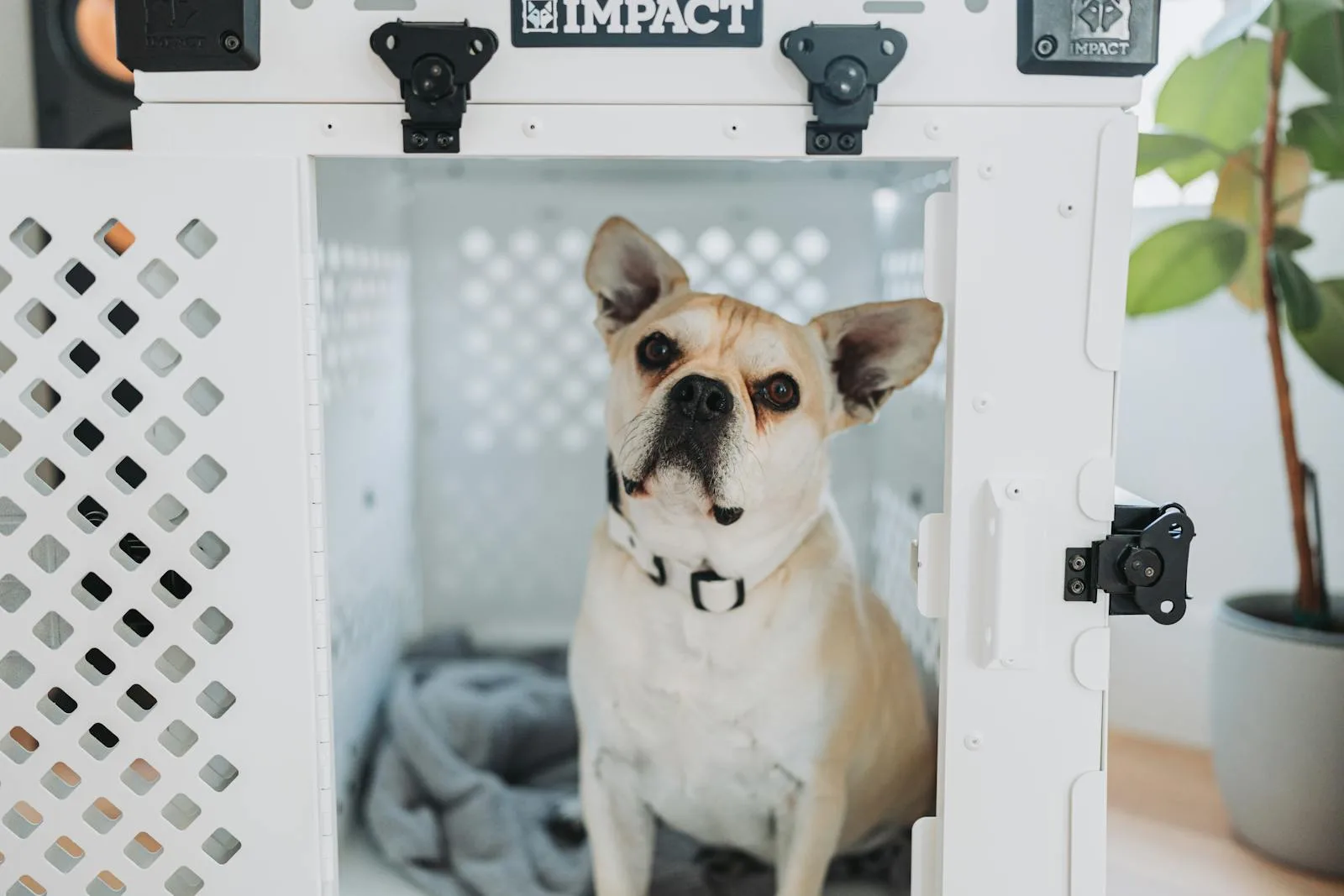
Crate Training and House Training: Why They Work Together
A crate is your most powerful house training tool, and it’s worth doing properly. Dogs naturally avoid soiling their sleeping area — it’s instinct. A properly sized crate uses this instinct to help your puppy learn bladder control.
Sizing matters. The crate should be big enough for your puppy to stand up, turn around, and lie down comfortably — but not so big they can wee in one corner and sleep in the other. Many crates come with dividers so you can adjust the space as your puppy grows.
The crate is never punishment. Never shove your puppy in the crate when you’re annoyed with them. It should always be a positive place — feed meals in there, give chews in there, leave the door open during the day so they can wander in by choice.
Crate schedule for young puppies:
- 8-10 weeks old — maximum 1-2 hours in the crate during the day, taken outside immediately when let out
- 10-12 weeks — up to 2-3 hours
- 3-4 months — up to 3-4 hours
- 5-6 months — up to 4-5 hours
At night, most puppies will need at least one toilet break for the first few weeks. Set an alarm. It’s not fun, but it’s better than the alternative. By around 14-16 weeks, many puppies can make it through the night — though smaller breeds often take longer.
What About Puppy Pads?
Puppy pads are controversial in the training world, and for good reason. They teach your puppy it’s acceptable to go inside, which is the opposite of what you’re trying to achieve. However, there are situations where they make sense:
- Flat dwellers without quick garden access
- Very young puppies (under 8 weeks, before vaccinations are complete)
- Overnight in a puppy pen when you can’t get up for toilet breaks
If you do use pads, place them by the door and gradually move them outside over a week or two. The goal is always to transition to outdoor toileting as quickly as possible.
For most people with a garden, skip the pads entirely. You’re adding an unnecessary middle step.
Dealing with Setbacks and Regression
You’ll have a week where everything clicks — your puppy goes outside every time, you’re feeling smug, you text your mate saying “house training is easy, actually.” Then the next week, three accidents in one day. This is completely normal. Our Best Cat Food 2026 UK: Complete Wet & Dry Brands guide is useful alongside this.
Common causes of regression:
- Growth spurts — bladder control can wobble during rapid growth
- Changes in routine — new people in the house, a different schedule, even moving furniture
- Illness — a urinary tract infection (UTI) can cause sudden accidents. If your previously reliable puppy starts having frequent accidents, see your vet
- Excitement or submissive urination — some puppies wee when they’re overwhelmed with excitement or nervous. This is involuntary and they’ll grow out of it. Stay calm and don’t draw attention to it
When regression happens, just go back to basics. More frequent garden trips, closer supervision, smaller intervals. You’re not starting over — you’re reinforcing what they already know.
Cleaning Up Properly: Why It Matters More Than You Think
If your puppy can smell where they’ve been before, they’ll go there again. Dog noses are about 10,000 times more sensitive than ours, so even if you can’t smell anything, they can.
The golden rules of cleanup:
- Use an enzyme cleaner — not bleach, not Dettol, not vinegar. Enzyme cleaners break down the uric acid crystals that standard cleaners leave behind. Simple Solution and Bio One are both widely available from Pets at Home
- Blot first, then spray — soak up as much as possible with kitchen roll before applying the cleaner
- Don’t use ammonia-based products — urine contains ammonia, so ammonia cleaners can actually encourage your puppy to go in the same spot
- Treat hard floors and carpets differently — on carpet, you may need to soak the area with enzyme cleaner and leave it for 10-15 minutes before blotting
Nighttime House Training
Nights are tough in the beginning. Here’s a routine that works:
Last water at 7-8pm. You don’t want to restrict water during the day — puppies need to stay hydrated — but limiting evening water reduces overnight accidents.
Final garden trip at 10-11pm. Make it boring. No play, no excitement. Just toilet and straight back to bed.
Set an alarm. For young puppies (8-12 weeks), set an alarm for 3-4 hours after bedtime. Take them out, keep the lights low, no fuss, toilet, then back in the crate. Over the weeks, push the alarm later and later until they make it through.
Keep the crate in your bedroom for the first few weeks. Your puppy will settle faster, and you’ll hear them whimpering if they need to go out. Once they’re reliable, you can gradually move the crate to wherever its permanent spot will be.
How Long Does House Training Take?
The honest answer: it depends on the dog, the breed, and how consistent you are.
- Small breeds (Chihuahuas, Yorkshire Terriers, Dachshunds) often take longer — smaller bladders, faster metabolisms
- Medium to large breeds (Labradors, Spaniels, Retrievers) typically get the hang of it within 4-8 weeks with consistent training
- Brachycephalic breeds (French Bulldogs, Pugs) can be stubbornly slow — patience is key
Most puppies are reasonably reliable by 5-6 months, with occasional accidents. Fully house trained — where you genuinely don’t think about it anymore — usually happens around 8-12 months.
If your puppy is over 6 months old and still having regular accidents despite consistent training, it’s worth a vet visit to rule out anything medical.
Common Mistakes to Avoid
Giving too much freedom too soon. A puppy with unsupervised access to five rooms will find their favourite spot behind the sofa and use it repeatedly. Keep them in the room you’re in, use baby gates, and only expand their territory as they prove reliable.
Inconsistent routines. If one person takes the puppy out every hour and another lets them wander for three hours, your puppy gets mixed signals. Everyone in the household needs to follow the same plan.
Celebrating too early. Three dry days doesn’t mean you’re done. Keep the routine going for at least two weeks after the last accident before you start relaxing.
Relying on your puppy to “tell you.” Some puppies learn to go to the door and whine. Many don’t — at least not at first. Until your puppy actively signals, the responsibility is on you to take them out proactively. You can encourage signalling by hanging a bell on the door handle and nudging it with their paw before every trip outside, but don’t assume they’ll figure it out independently.
When to Get Professional Help
Most puppies respond well to consistent house training at home. But consider a professional trainer or behaviourist if:
- Your puppy is over 6 months with no improvement despite consistent effort
- Accidents seem related to anxiety (whimpering, pacing, destructive behaviour when alone)
- You suspect a medical issue — your vet can rule out UTIs, kidney problems, or digestive conditions
- You’re struggling with the routine yourself — there’s no shame in asking for help
The Association of Pet Dog Trainers (APDT) maintains a directory of qualified trainers across the UK, and your vet can recommend local behaviourists too.
If you’re also working on other aspects of early puppy care, our guide on how to brush your dog’s teeth at home covers another habit worth building early — the sooner you start, the easier it is.
Frequently Asked Questions
How long does it take to house train a puppy? Most puppies become reasonably reliable by 5-6 months with consistent training. Full house training, where accidents essentially stop, typically happens around 8-12 months. Small breeds often take longer than larger breeds.
Should I use puppy pads for house training? For most people with garden access, puppy pads add an unnecessary step. They teach your puppy it's acceptable to go indoors. However, they can be useful for flat dwellers, very young unvaccinated puppies, or overnight in a puppy pen.
Why is my house trained puppy suddenly having accidents? Regression is common and can be caused by growth spurts, routine changes, illness (especially urinary tract infections), or excitement urination. Go back to basics with more frequent garden trips, and see your vet if accidents persist.
Can I house train a puppy without a crate? Yes, though a crate makes the process faster and easier. Without a crate, you'll need to supervise your puppy constantly and use baby gates to restrict access to the house. The core principles of frequent outdoor trips and immediate rewards still apply.
What age can a puppy hold it through the night? Most puppies can sleep through the night without a toilet break by around 14-16 weeks old. Smaller breeds may take longer. Until then, set an alarm to take them out once during the night.