The best dog muzzle UK owners can buy is usually a well-fitted basket muzzle, not a tight fabric sleeve. Your dog needs room to pant, drink and take treats, especially on walks, vet visits and public transport. A muzzle is not a punishment or a shortcut for training; it is a safety tool that only works properly when the fit and introduction are right.
In This Article
- Best Overall: Baskerville Ultra Dog Muzzle
- Who Actually Needs a Dog Muzzle
- Basket, Soft and Custom Fit: Which Type to Choose
- Fit, Comfort and Safety Checks
- Best Dog Muzzles 2026 UK: Product Picks
- How to Introduce a Muzzle Without Making It a Fight
- Buying Mistakes to Avoid
- Frequently Asked Questions
Best Overall: Baskerville Ultra Dog Muzzle
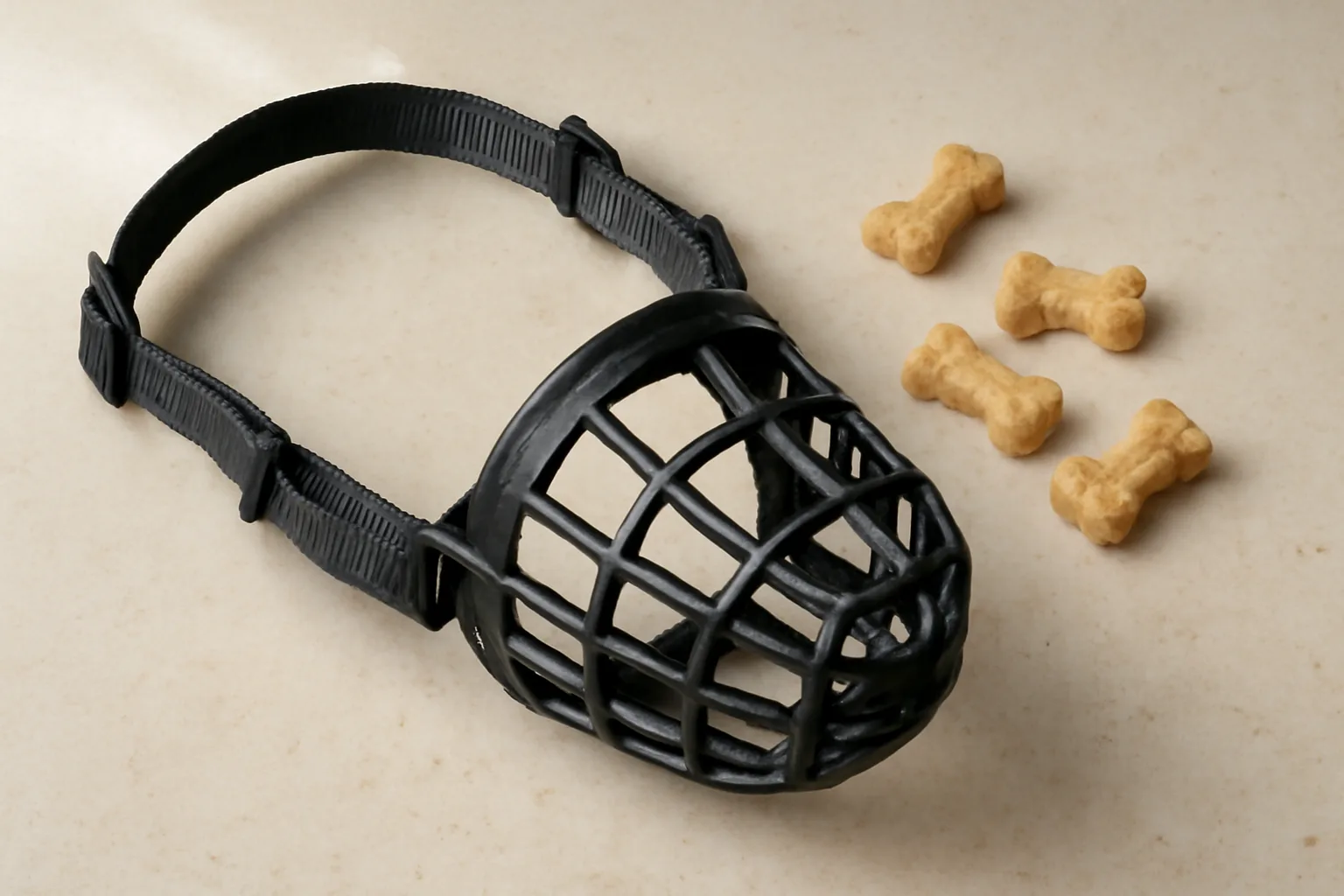
If I were buying one muzzle for a normal UK dog-walking life, I would start with the Baskerville Ultra. It is not the prettiest option, but it gets the main things right: basket shape, adjustable straps, decent availability and enough nose room for many breeds.
Why it wins for most owners
The Baskerville Ultra usually costs about £11-£17 at Pets at Home, depending on size, and is also widely stocked through Amazon UK and independent pet shops. That matters more than people think. If the first size is wrong, you can swap it quickly rather than waiting three weeks for a specialist order.
It suits owners who need a muzzle for:
- Vet visits: safer handling when a dog is injured, nervous or sore.
- Scavenging: reducing access to stones, food waste and unpleasant pavement finds.
- Managed walks: extra safety around dogs, people or busy entrances while training continues.
- Travel: buses, trains, ferries, grooming salons and kennels that ask for muzzle tolerance.
The shape lets many dogs pant and drink, although you still need to check your own dog’s mouth opening rather than trusting the size chart blindly. Based on UK owner reviews, the most common complaint is not durability; it is buying too small because the dog looked between two sizes. Go larger if your dog can still keep the muzzle secure, then adjust the straps.
Where it is weaker
The Ultra is not perfect for every face. Short-nosed breeds, very narrow sighthounds and chunky bully-type heads often need a different shape. The plastic can also rub if the muzzle sits against the nose bridge or cheeks, so do a calm five-minute home check before trying it outside.
For a dog that must wear a muzzle daily, a custom biothane muzzle from a UK maker or specialist brand may be worth the extra money. Expect roughly £60-£120, not £15. That sounds steep until you compare it with a drawer full of cheap muzzles that never fitted.
Who Actually Needs a Dog Muzzle
A muzzle is sensible when it prevents a predictable problem and you are still working on the underlying issue. It is not a way to drag a panicking dog through situations they cannot handle. That difference matters.
Good reasons to use one
Some dogs need a muzzle because they eat things they should not. Others need one because pain, fear or frustration makes handling risky. Some owners use one while following a trainer’s plan for reactivity. I would rather see a relaxed dog in a roomy muzzle than an owner pretending everything is fine with a lead wound round their wrist.
Good use cases include:
- Scavenging walks: useful for dogs that grab cooked bones, discarded food, stones or poo before you can intervene.
- Vet handling: sensible if your dog may snap when sore, cornered or examined.
- Reactivity management: helpful alongside distance work, reward-based training and quieter routes.
- Introductions: sometimes useful during carefully managed dog-to-dog work with a qualified behaviourist.
- Public transport: worth training in advance for trips where staff or policies may require it.
If the issue is pulling, start with how to stop a dog pulling on the lead and the right walking kit. If the issue is recall, a muzzle does not replace a long line for dogs. Use the right tool for the problem.
Poor reasons to use one
Do not use a muzzle to leave dogs together unsupervised, to let children crowd a nervous dog, or to push a reactive dog into busy places. A muzzled dog can still lunge, pin, knock someone over or become more frightened. It can also overheat if the muzzle blocks panting.
PDSA advises introducing a muzzle positively and at the dog’s pace over short sessions, which is the right tone: the dog should learn that the muzzle predicts food and calm handling, not restraint. Their muzzle training advice is worth reading before the muzzle ever goes near your dog’s face.
Basket, Soft and Custom Fit: Which Type to Choose
The muzzle type matters more than the brand name. A cheap basket muzzle that lets your dog pant is usually safer for walks than a soft sleeve that clamps the mouth shut.
Basket muzzles
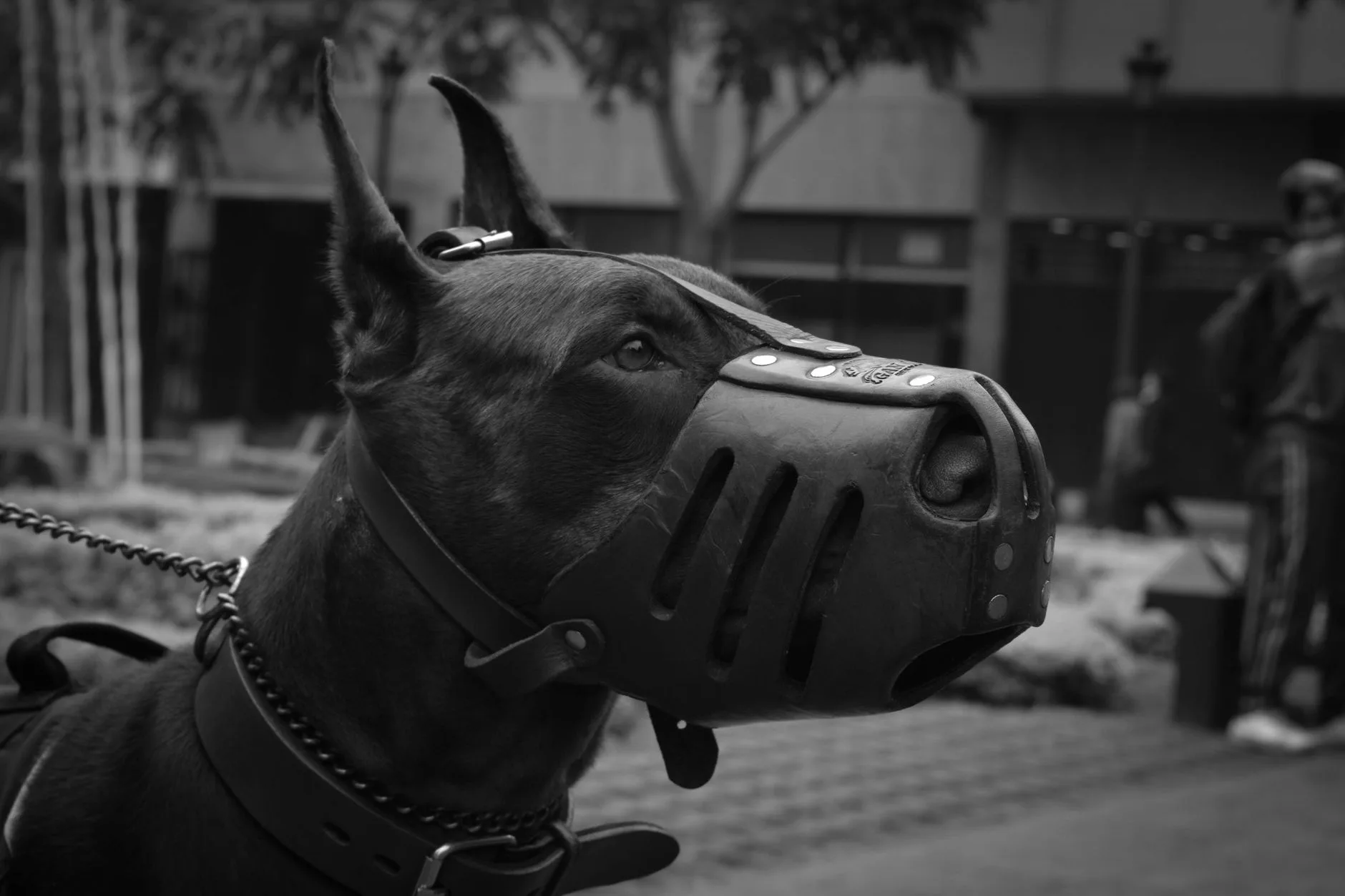
Basket muzzles are the default choice for walking, training and longer wear. They form a cage around the nose and mouth, leaving space for airflow. The best ones let a dog open their mouth enough to pant, drink and take small treats through the front or side.
The trade-off is bulk. Basket muzzles look more serious, which can feel awkward the first few times you walk through a park. Get over that. A visible muzzle often gives you more space, and space is useful if your dog is worried or easily wound up.
Soft fabric muzzles
Soft muzzles are usually nylon sleeves with a strap behind the head. They are cheap, compact and handy for very short handling moments, such as a groomer trimming nails or a vet doing a quick check.
They are poor for normal walks because they can restrict panting. I would not use one for exercise, warm weather or any situation lasting more than a few minutes unless your vet has given specific instructions. A £7-£10 Pets at Home training safety muzzle has a place, but that place is short controlled handling, not a 40-minute summer walk.
Custom-fit muzzles
Custom muzzles make sense when standard sizes keep failing. Think sighthounds, flat-faced breeds, unusually broad heads, dogs needing all-day professional handling, or dogs with a known bite history where security cannot be approximate.
UK custom and semi-custom options often use biothane or coated webbing. They are lighter than many plastic baskets and can be made with colour choices, extra pant room and stool guards. Prices vary, but £60-£120 is a realistic range once measuring, custom build and delivery are included. The risk is lead time and measuring error, so follow the maker’s instructions carefully.
Fit, Comfort and Safety Checks
Most muzzle problems are fit problems. Owners buy something that looks secure in the packaging, then discover the dog cannot pant properly, the bridge rubs, or the straps slide into the eyes.
The three measurements that matter
Measure with a soft tape while your dog is calm. If your dog is already suspicious of face handling, practise touching the nose and feeding treats for a few days before measuring.
- Snout length: from roughly 1 cm below the eyes to the nose tip.
- Snout circumference: around the widest part, with space added for panting.
- Head strap position: behind the ears, checking it will not slide forward.
A basket muzzle should not press into the nose leather. It should not sit so high that it pokes the eyes. You should be able to fit a finger under most strap points, but the dog should not be able to paw it off in two seconds.
The panting test
This is the non-negotiable check. Your dog must be able to open their mouth enough to pant. Dogs Trust’s muzzle training guidance builds up gradually before fastening and walking, which gives you time to spot tightness before the dog is stressed.
Try this at home:
- Let your dog sniff the muzzle: feed a treat and put it away.
- Feed through the muzzle: let the dog push their nose in voluntarily.
- Hold for one second: reward, then remove before they pull away.
- Fasten briefly: reward through the basket, unclip and stop.
- Walk indoors: check panting room, rubbing and strap movement.
Do not discover fit problems at the vet door. That is how muzzles become scary.
Best Dog Muzzles 2026 UK: Product Picks
These are the options I would actually shortlist in the UK. Prices move around, so treat them as current buying anchors rather than fixed guarantees.
Best overall: Baskerville Ultra
The Baskerville Ultra is the safest first recommendation for most medium-length snouts. It usually sits around £11-£17 at Pets at Home, with similar pricing on Amazon UK depending on size and colour.
- Best for: everyday walking, vet visits, scavenging management and training.
- Why I like it: good panting space, treat access, broad UK availability and enough adjustment for many dogs.
- Watch out for: awkward fit on very short, very narrow or very broad heads.
If you are buying your first muzzle and your dog’s face shape is fairly typical, this is where I would spend the money.
Best budget basket: Baskerville Classic Anti Scavenge
The Baskerville Classic Anti Scavenge is cheaper and simpler. Company of Animals lists the Classic from about £7.99, while smaller UK retailers often sell it around £8-£20 depending on size.
It is a decent pick if scavenging is the main issue and your dog has a longer nose. The guard insert helps reduce access to rubbish, although no muzzle makes pavement food impossible to reach. A determined dog with a perfect chip-shop wrapper target will still try their luck.
The Classic feels less forgiving than the Ultra, so I would measure more carefully. It is not the one I would choose for a hard-to-fit dog.
Best cheap soft muzzle: Pets at Home Dog Training Safety Muzzle
For short handling jobs, the Pets at Home Dog Training Safety Muzzle is usually about £7-£10. It is cheap, easy to find and compact enough to keep in a grooming bag or car kit.
Use it for brief, supervised moments only. It is not my choice for walks because panting room is limited. If you need something for outdoor training, spend the extra £4-£10 on a basket design.
Best stronger premium option: BullyBillows Premium Comfort Muzzle
BullyBillows sells premium comfort muzzles through Pets at Home at about £49.99 in selected sizes. This is a more substantial option for broader-headed dogs where a standard Baskerville shape can feel narrow or unstable.
The price is high for a first experiment, so I would only start here if your dog clearly suits the shape or you already know cheaper baskets have failed. Check return rules before ordering because muzzle fit is personal.
Best custom route: made-to-measure biothane muzzle
For awkward fits, daily use or behaviourist-led safety plans, a made-to-measure biothane muzzle can be the better long-term buy. UK custom makers commonly land around £60-£120 depending on size, stool guard, colour, padding and delivery.
The benefit is comfort and precision. The downside is that you must measure well and wait. If your dog needs a muzzle next week for a vet appointment, buy a workable basket now and treat custom as the long-term upgrade.
Quick comparison
| Option | Typical UK price | Best use | Main caution |
|---|---|---|---|
| Baskerville Ultra | £11-£17 | Most walking and training use | Can fit poorly on unusual face shapes |
| Baskerville Classic | £8-£20 | Budget anti-scavenging | Less forgiving than the Ultra |
| Pets at Home soft muzzle | £7-£10 | Brief handling | Not suitable for exercise |
| BullyBillows premium muzzle | About £50 | Stronger broad-head option | Expensive if fit is uncertain |
| Custom biothane muzzle | £60-£120 | Daily wear and hard-to-fit dogs | Lead time and measuring accuracy |
How to Introduce a Muzzle Without Making It a Fight
The worst muzzle is the one that only appears when something bad is about to happen. If the muzzle comes out only for injections, nail clips or busy dog encounters, your dog will learn to hate it fast.
Make the first week boring
Keep sessions tiny. Put the muzzle on the floor, feed near it, then put it away. Next time, feed through the basket. Later, clip it for one second. You are building a habit, not testing obedience.
A realistic first-week plan looks like this:
- Days 1-2: muzzle appears, treats appear, muzzle disappears.
- Days 3-4: dog puts nose in voluntarily for food, no fastening.
- Day 5: strap touches the neck, then releases.
- Day 6: one-second fastening indoors, then a treat scatter.
- Day 7: short indoor walk, then stop while the dog is still relaxed.
For reactive dogs, pair this with wider behaviour work. PawPicksUK’s guide to positive reinforcement dog training is the better starting point for changing the emotion behind the behaviour.
Practise normal life, not just emergencies
Once your dog accepts the muzzle indoors, use it for low-pressure moments: walking to the car, sniffing in the garden, sitting at the vet reception for treats without an appointment. That last one is underrated. Five calm minutes in a waiting room can do more good than forcing the first muzzle trip to happen during a painful examination.
If your dog guards food, snaps around handling or has already bitten, get qualified help rather than relying on kit. A muzzle reduces risk; it does not make poor setups safe.
Buying Mistakes to Avoid
The biggest mistake is buying the muzzle that looks least embarrassing to the owner. Your dog does not care if the basket looks chunky. They care whether they can breathe, pant, drink and move their jaw.
Mistake: choosing soft because it looks kinder
Soft muzzles often look gentler because they are smaller. In use, they can be more restrictive. For walks, a basket muzzle is usually kinder because it allows airflow and mouth movement.
Mistake: treating the size chart as final
Size charts are starting points. Breed labels are worse. Two Labradors can have different muzzle needs, especially if one has a broader skull or shorter snout. Measure, try, check panting room, then decide.
Mistake: ignoring the rest of the walking setup
If your dog is reactive or powerful, a muzzle is only one layer. A well-fitted harness, secure lead handling and route choice matter too. For gear decisions, compare dog harnesses for no-pull walking and harness vs collar choices before assuming the muzzle will solve everything.
Mistake: skipping the boring practice
Training can feel slow because nothing dramatic happens. That is the point. If your dog calmly puts their nose into the muzzle for a bit of cheese, you are doing it right. If you have to pin them down and wrestle the strap on, stop and go back several steps.
My final answer is simple: buy a basket muzzle first unless a vet or groomer needs a soft one for a very short job. Start with the Baskerville Ultra for most dogs, move to a Classic if anti-scavenging on a long-nosed dog is the priority, and pay for custom if normal shapes keep failing.
Frequently Asked Questions
What is the best dog muzzle UK owners should buy first? For most dogs, start with the Baskerville Ultra because it is a basket muzzle with good UK availability, fair pricing and enough adjustment for normal walking and training use.
Can a dog wear a muzzle on a walk? Yes, but it should usually be a basket muzzle that allows panting, drinking and treat access. Avoid soft fabric muzzles for exercise, warm weather or longer walks.
How much should I spend on a dog muzzle? A useful budget is £11-£20 for a mainstream basket muzzle, £7-£10 for a short-use soft muzzle, about £50 for a stronger premium option, or £60-£120 for custom biothane.
Are muzzles cruel? A well-fitted, positively trained basket muzzle is not cruel. A tight muzzle that blocks panting, rubs the face or is forced on without training is a welfare problem.
Can a muzzled dog still drink water? Many basket muzzles allow drinking, but you must test this with your own dog. Soft muzzles usually restrict mouth movement too much for drinking or proper panting.
Do muzzles stop biting completely? They reduce bite risk but do not remove every risk. A muzzled dog can still lunge, scratch, knock someone over or become distressed, so supervision and training still matter.